Thursday, October 4, 2012

It's That Time Again...

Well, with this we officially kick off this year's Octoberfest (...I've really got to find a better name for this in the future.  Suggestions are welcome!)

Featured here is one of the most common breeds of evil movie child, the evil British child.  Though featuring the eerie silence and unnerving stare of many other variations of evil child, the British breed is usually distinguished by the strangely dignified voice with which it either threatens you or tries to convince you it won't kill you.

10/1 - Village of the Damned

You know, it's interesting how this film's reputation compares with the actual finished product.  I mean, when you mention this title to people, the first thing evoked is usually the film's famous unearthly children that serve as its antagonists.  Surprisingly, however, the film doesn't focus on them nearly as much as its reputation would suggest.  They are still a key part of the film, don't get me wrong, but it also delves quite a bit into the circumstances of their arrival, among other things.  The children aren't even around until at least a third of the way into the 80 minute movie.  Much of the first section is focused around the phenomena that leads to their arrival - alongside the investigation at the start, there are also some surprisingly serious bits of exploring the fallout.  Most notable of these parts are the repercussions in the village of Midwich when all of the women become pregnant; as you can imagine, not everyone takes the news well.  Even after the children arrive, a large chunk of the story is devoted to the adults trying to ascertain what to do with them, particularly focusing on the conflict between the pragmatic Major Bernard (Michael Gwynn) and the idealistic Gordon Zellaby (George Sanders.)  Gordon's arc in particular helps carry much of the second half of the film as his views of the children become increasingly more conflicted by their own actions, building to the film's surprisingly tense climax.  However, this isn't to sell the children short, as the film still handles them well.  Specifically, the scenes in which they exert their will on others, between their acting and the directing, still have a surprising air of suspense to them as even the inevitable action feels more ominous than predictable.  All in all, for a film that tends to be viewed at large as just a classic 'evil children' horror film, this handles it subject matter with a surprising amount of thought and a good degree of tension to keep its story going.  If you're ever in the mood for a classic and haven't looked into this one, give it a shot - time has actually been surprisingly good to it.

Alas, this image is the only thing to survive from the infamous episode of The Muppet Show guest directed by Alejandro Jodorowsky.

10/2 - The Abominable Dr. Phibes

It took me this long to get to a Vincent Price title?  Wow.  Have to say though, this was a Hell of a way to welcome the guy to the festivities - vengeance from beyond the grave, Biblical curses, and some surprisingly good organ work all conspire to make this a pretty damn enjoyable piece of craziness.  This is especially entertaining since the story itself could have been rather down to earth - Vincent Price plays Anton Phibes, a well respected doctor with several degrees in several fields.  One night, his wife dies during a surgical procedure, his car crashes and so the two are believed dead.  Years later, the doctors who worked on the operation are now being murdered one by one in rather deliberate and elaborate deaths themed off of the ten plagues of Egypt - and the only suspect is a dead man...or is he?  The whole film makes for a pretty wild ride, with Price as a sort of bizarre mix of Phantom of the Opera and John Doe from Se7en in his quest to avenge his wife.  The entire plan calls for some elaborate murders that are, all things considered, fairly inventive, if a bit outlandish at times (the death by hail feels like something out of a James Bond movie.)  In the midst of this, the rest of the movie is focused on the investigation  that feels rather down to Earth, which just stands to make Phibes's insane world that much more memorable.  Probably one of the best touches within this setting, on comparing the two realms it plays in, is the fact the film never actively seems to try and condemn either side - the doctors (including Joseph Cotten as the head surgeon Phibes targets last) are all relatively normal people, and the film doesn't suggest the death was a result of carelessness or accident but rather sheer misfortune.  At the same time, despite the title, Phibes doesn't come across as a complete monster.  We certainly aren't exactly asked to take his side, but the film still takes time to show that for all of his wrath, this elaborate scheme is being done for his late wife rather than his own personal satisfaction.  Additionally, for a role where his appearance largely renders him unable to speak, and what dialogue he had was dubbed in after filming wrapped, Price still manages to make Phibes feel like a very signature character for his resume.  Admittedly, nowadays a lot of it feels somewhat over the top and silly, but that kind of adds to the fun in a way.  It may not necessarily scare you (though one scene involving rats may hit some if they have a phobia) but it's still a rather fun little revenge tale.

Passing up the temptation to Photoshop this into a 'Wish You Were Here'-style postcard was actually harder than I thought it would be.  Just so you all know.

10/3 - Sleepaway Camp

Now, anyone who's seen this is likely expecting some joke about the movie's infamous twist ending.  I considered one...more accurately, I considered several.  Then I realized honestly, let's keep it on the downlow, simply because knowing my luck, there would still be someone who didn't know the ending and I didn't want to be that jerk that spoiled it (I have a short list of standards, but there are some, thank you.)  That said, I have an odd relationship with this film - on the one hand, I think it may be one of the most riffable horror movies I have seen in years.  I mean, there's a lot I can say for elements of this movie in jest on many levels...and, admittedly, that's part of the fun of it for me.  At the same time, I can't bring myself to entirely call it a bad movie, even in the fun sense.  As a low-budget indy slasher of the early 80s, for all its faults, the film carries itself just on the line between earnestness and camp that I can't help but be won over by.  Additionally, the film actually does have some good for it - despite the afforementioned budget, the movie actually makes for some pretty damn impressive visual effects on the kills and the film's earlier mentioned twist ending manages to pull the rare feat of being incredibly hard to predict, yet actually making sense within the overall movie.  Actually, I will say this for said twist - this is one of those films where knowing the reveal doesn't really spoil things.  In fact, on rewatching it for this month, I actually found some moments actually feel even creepier thanks to that extra knowledge of things you don't have the first time around.  That said, outside of the twist, the writing is definitely one of the odder parts of the film - both in terms of some downright bizarre choices in wordplay (admittedly, the fact most of the cast are kids leads me to cut it some slack here) and in the overall plot.  On that note, I just want to say - next to Kamp Krusty, I think Camp Arawak may be the silver medal winner for one of the worst-run summer camps I've seen in fiction in years.  I don't even just mean the obliviousness necessary for a slasher film either, I mean between the abusiveness of some of the counselors and the openly pedophilic cook, this camp was bound for a lawsuit even before the bodies started stacking.  If anything, the killer was doing the camp a favor by given them an external reason for getting shut down. 

Overall, this certainly isn't going to be a film that'll take home any awards...but for all of its ridiculousness, I can certaintly see where the cult appeal comes from, and am happy to have a copy of it in my collection.

Pictured here:  The controversial cover art rejected for use on the reprinted versions of 'What To Expect When You're Expecting'

10/4 - Inside

Where to start here?
Well, I believe the comedian John Belushi said it best when he said "HOLY SHIT!"  This movie just...well, after doing I Spit On Your Grave and Cannibal Holocaust last year, it felt fitting to make sure this year had at least one infamous and generally disturbing film on deck.  It just so happened, this also allowed me to continue the other tradition Rosemary's Baby established by being this year's 'If You Show This Movie To a Pregnant Woman, You're Officially an Asshole' entry.  That said, wow.  I will admit, I'm still relatively new to the New French Extremity brand of horror (prior to this my only other direct contact with it was High Tension) so there's still a learning curve at play here.  That said, I should probably start with the story - which is part of what had me curious in the first place because damn, it's a pretty effective premise.  For those playing at home not familiar with this one, let me just sum it up as follows - Alysson Paradis plays the film's protagonist, a pregnant woman who will soon be giving birth.  One night she's visited by a stranger who knows who she is...and more importantly is determined to take her baby.
...and of course, she's got the crazy to act on it.  What follows is a visceral and brutal game of cat and mouse between the two where parts get mutilated and passersby wind up dead.  As a thriller, it's pretty intense - even outside of the pretty shocking gore (as years of jokes about the French being wusses blow back with a vengeance) the film builds up its suspense well, and much of the last half hour has a sense of dread hanging over it that really starts rubbing off after a while.  Additionally, and adding to this, the two leads play their roles well - though we only know a little about Paradis's Sarah and even less about Beatrice Dalle's unnamed antagonist, what the two bring to these characters still leads us to feel degrees of concern and fear respectively, and adds to the "Oh shit!" moment of reveal at the end.  Much like last year's "OH GOD!" entries, this is certainly not a film to consider if you have any doubts about your constitution.  That said, even outside of the brutal violence, the film actually carries itself well as a suspense film.  Just one with several moments of sheer 'drop the jaw in utter disbelief at what you just witnessed' along for the ride.

"So to review, you can either take the year's supply of soup, the entire living room furniture set, or you can trade it all in for what's behind Door #3.  Choose carefully."

10/5 - In the Mouth of Madness

Before I start this, I'd like to indulge for a moment in behavior I'm sure some would describe as 'hipster.'  To which, if I may be so bold, I'd like to say - fuck it, I don't care.  ANYWAY, this is one of those films I'm glad to see people have come around on.  When I first encountered this movie, it was back in high school when a friend introduced me to it.  One borrowed tape and some good natured abuse of the school's PR department equipment later and I was now up a copy as well that saw a good deal of use before I eventually picked up a copy on DVD years later.  Back then, this movie was primarily identified on lists of films inspired by the works of H.P. Lovecraft (deservedly so.  I actually have this movie to thank for my getting into his works.)  Seeing it finally come into its own nowadays where it has gained considerably more respect and something of a small following makes the embittered high schooler inside me smile.

Now then, back to the movie itself.  With this, we've now covered the third part of John Carpenter's 'apocalypse trilogy.'  Yes, I realize this means I've run them out of order.  I'll tell you guys what, this clinches Prince of Darkness for next year to round out the trilogy.  As the conclusion to his thematic trilogy, I'd say this is probably one of Carpenter's more ambitious films of his later years.  I mean, in a time when Lovecraft was still something of a smaller niche than he's become now, to make a mainstream film that takes as much influence as this film does from Lovecraft takes a lot to pull off.  To their credit, Carpenter and screenwriter Michael De Luca prove up to the task for the most part.  While I'm not sure I can say this has the full appeal of many of Carpenter's earlier hits, among his offerings from the 90s on, I'd say this is quite possibly his best.  It shows a solid grasp of the mythos it's playing with while also making some interesting use of the metafictional ideas that make up the basis of the story.  One of the best components of the film in that regard then goes to Jurgen Prochnow as the film's antagonist - enigmatic horror writer Sutter Cane, whose works may not be just the pulpy monster stories they appear to be.  As the skeptical protagonist turned Lovecraftian narrator John Trent, Sam Neill's more straight-laced style fits his role well, and he manages to handle the film's chaotic finale well to boot.  If there's anything I'd say this film could be said to stumble on it would be with regards to the effects - while they're largely not bad, the big reveal at the end of the film feels somewhat anticlimactic.  I mean, on they're own, they're decent creature designs.  For monsters whose sheer existence is expected to be beyond the pale of human reckoning however, they feel rather underwhelming - doubly so from the man whose prior remake of The Thing STILL manages to wow people with its creatures.  Despite this shortcoming, it has still held up well as one of the first mainstream bids at Lovecraftian cinema, and it is nice to see it has come into its own since then.

--

Now then, to give a update so you guys all know in advance - the next entry will be a truncated one, however this will be for a good reason.  Next weekend I will be among the many foolhardy who will be braving the crowds in a chance to get a closer look at what the industry has in store at New York Comic Con.  As such, posting at my usual time next week will prove problematic.  As such, I will post what I have done on Wednesday next week, and then the subsequent week, to make up for it will include that week's entries as well as the extra from this up coming week.  And, as a further show of good faith, I will even throw in the time-honored convention report.  Given some of the titles being covered and the guests announced, it should prove interesting.

Until then...well, I'm not one to tell you guys what to do.  Just try and come by again next week when you can.

Thursday, September 27, 2012

"This is a Review About Trickery and Fraud...About Lies."

...well...the above listed as well as an announcement at the end, but all things in due time.

With a paraphrased quote like that as a lead-in, let me start by saying that even I admit to having been a little surprised by this film.  Prior to this film, I, like many people, knew Orson Welles from one of three facets:
-As a well known and highly respected actor/director renowned for being a very intense individual
-The unfortunate later years which lead him to rather unusual side projects to fund his main interests - perhaps best encapsulated by one of the last roles of his life voicing Unicron in the Transformers movie
-and as an entertainingly cantankerous old man who, despite doing projects he may not have been proud of, still found enough pride in himself to verbally tear apart a badly written commercial spot he'd been asked to read.

So when I first learned about his semi-documentary F for Fake (or, as it's called within the movie, About Fakes) I wasn't entirely sure where in the spectrum I would find this to be.  My initial impulse being the intense man of his prime and in his element.  To my surprise, I discovered a Welles I never expected. I never thought I'd see the day I'd call Orson Welles playful...and yet, this movie certainly showed it, and not just in his behavior.  The entire way the movie is shot gives a rather different sort of look at Welles - it certainly shows itself as a product of the man's passions, don't get me wrong, but given the subject matter, he also approaches it with an almost fun air.

I'm actually rather glad they market under the other title.  This one just doesn't roll off the tongue as well.
...look, these captions can't be zingers all the time.  Just saying.

Equally surprising is the fact that, in his own way, Welles actually seems to side with the idea of fakers. In fact, in the beginning of the film he even identifies himself as a charlatan with a smile on his face.  Further, he has a friendly rapport with particular fakers the film focuses on, and  that keeps the film from feeling like a formal affair.  Instead, it feels almost more like a casual sit-down conversation at times.  This loose feeling is also embodied in his focuses - in looking at the notion of the hoax, Welles focuses much of the film on two prominent hoaxsters: Elmyr de Hory, an art forger who, at the time of the movie, has worked for over 20 years and has consistently delivered astonishingly accurate fakes; and Clifford Irving, the infamous author known for his faked memoirs of reclusive millionaire Howard Hughes.

Artist's Rendering.
...I have to admit, I think I'm just gonna picture this whenever I think of Hughes in the future.  If only cause this is a hard to top take on the idea.

In particular, Welles focuses much of the film on Elmyr, and for good reason - he is a genuinely  fascinating subject.   He's a very good-humored and surprisingly talented man whose technique of forgery is  almost more of a hobby to him than simply a means of income - we see him actually burn many of his works that he could have easily profited from.  If anything, any profit he makes from the paintings is more secondary to his amusement at the idea that his work is convincing enough for people to offer as much money as they do for them.

This is made even better by the fact he's smiling as he does it.  I can only imagine some of the shenanigans he pulled on people that ended like this.

Additionally, it's through the idea of Elmyr that Welles explores some other interesting notions regarding art and the art world.  In particular, though only briefly touched upon, the film has a rather criticial approach towards the entire art dealer culture and the idea that art's value is artificially instilled by experts.  On that note, actually the lighter approach to much of the film makes these meditations stand out more.  In particular, one sequence near the end of the film when Welles reflects on an old cathedral and the idea that art is, in many ways, a sort of echo of man that will eventually fade in time.  It takes a surprisingly darker tone from much of the film, but that allows it to stick in the memory a bit more.

"...and for my next trick, a reminder of your own inescapable mortality."

Alongside exploring Elmyr's story, and somewhat tied into it, Welles also explores the backstory of Irving's infamous scandal.  His tale fares less fortuntely compared to Elmyr.  In fact, exposure seems to have even helped Elmyr.  Many of his friends speak well of his capabilities.  Comparatively, we don't see quite as much said in favor of Irving and his staged autobiography.  Welles certainly goes into many of the details of the case, raising questions of if Hughes had any part to play in things.  Even when the famed recluse supposedly came forward (by phone) Welles raises the question of if it's truly him, or another facet of the hoax.  Overall, while it still provides a good overview of the hoax, it does feel somewhat less personal than the focus on Elmyr, with less direct study of Irving and more of the entire mystery around him.  Nevertheless, Welles's exploration of the mythos of Howard Hughes and Irving's part in it also makes an interesting aside in the film, in particular outlining why it happened and why people were so fascinated by it in the first place.

Sorry Cliff, but I think the earlier image of the man beats yours.  Points for trying though.

There is an additional story near the end of the film Welles goes into - a rather curious tale of one Oja Kodar and her own adventures in the world of art forgery. Rather than describe, I can honestly say it is a sequence that really has to be watched to be fully enjoyed.  In particular, the way Welles and Kodar recount the tale is a nice bit of shooting and really helps draw you into the tale.  It's an interesting note to end the film on.  Though it's only tangentially tied to the two main stories, it still provides a very nice little riff on the theme, and watching it truly does it justice.

Seriously, with this as a lead-in, I just don't have it in me to spoil the surprise for you guys.

If I had to say one other thing for this film overall, it's that, even along with his playfulness as a host (Welles even starts the movie demonstrating sleight of hand magic to a child, as shown above,) Welles's easygoing nature seems to show through in the direction.  The entire movie moves with a sort of free-form, loose style rather than a focused approach, and it really keeps the movie flowing nicely.

 To give credit where it's due - Elmyr de Hory, with his rendering of another famous art forger (guess who? ... or just watch the movie and learn that way, that's fine too.)
and Clifford Irving - because sometimes one really big spectacular bluff is enough to put you up there with the guy who's been on a decades-long strong streak.
...actually, I really do have to hand it to Irving, the film really does help give you a respect for the fact he got away with as much as he did.

Is this one of Welles's most acclaimed masterpieces?  Not sure I'd say that for it.  It is, however, certainly a fascinating project for him.  He takes a rather vague topic and manages to still explore it in a well thought out fashion, and even manages make some interesting food for thought of its own.  It's one of those films that really helps remind one of some of the interesting things a documentary can be capable of when approached the right way.

"Now then...which one of you bastards did I just hear start a sentence with 'In July'?"
 
...sorry.  It's Orson Welles, the reference is almost inevitable.
Having said that, as stated above, it's announcement time:

As of this time next week, we'll officially be into October.  Good weather, seasonal decorations, and right now the only tradition that has safely managed to stick here at the Third Row - that's right.  We're repeating last year's Beer and Lederhosen-Free Octoberfest.  For those who missed this and are thinking 'Nuts to checking the archives' the set-up is simple - entries will still be here every Thursday (roughly.  There may be a week mid-month when this is delayed for reasons that will be explained when the time comes.)  Instead of the standard full review, this month is 31 films, a horror film a day, with a weekly writeup on each of the entries.

I don't mind saying that I'm actually looking forward to this one.  This was a fun event to do last year and it's a Hell of a list lined up for this time around.

So keep an eye out, and will see you all next week when this craziness kicks off with our first four features!

Till next time...feel free to insert a maniacal laugh of your choice here.

Saturday, September 22, 2012

We Now Return You To Your Disappointed Review, Already in Progress

Well, let no one say that I'm not a man of my word.  Last week I promised you guys Battletruck, and Battletruck you shall have (though I imagine not many of you were particularly excited for this one.)

It's funny, the more I look at the post-apocalypse genre of film, the more I realize that, all things considered, it's pretty diverse.  I mean, while the first image is usually going to be George Miller's Mad Max movies, people will then in turn remember such other standouts as A Boy and His Dog, Fist of the North Star, The Day After, The Road, and even the Fallout game series.  Each of these took the loose idea and managed to find their own voice amidst it, ranging from brutal action in a world with society's restrictions loosened to grim realizations of the potential twilight of humanity, to a tongue-in-cheek look at some of the ways society could reshape itself in the aftermath of it.

Then - A grim statement of a future where scarce resources have become scarcer
Now - A punchline of your choice to be filled in here.

Why am I bringing up all of these other films?  In part because, comparatively speaking, Warlords of the 21st Century (the official name of the movie) makes unfortunately the worst mistake you could make under the circumstances.  It's not really that good, but at the same time, it's not exactly that bad either.  It's a very rather lukewarm offering.  But I'll get back to that in time.


As I can see everyone's on the edge of their seat for it...

The story starts, as many of these stories do, in media res - throwing you right into the middle of the action with very little explanation beyond a very quick overview that's only missing the 'You'll figure it out as you go' at the very end.  The stage is set for us through a short prologue delivered in large part via radios - in the aftermath of an age known as The Oil Wars, resources are now scarce and government has broken down.  In the middle of this chaos, military leader Straker (James Wainwright) has gathered up a cadre of loyal soldiers and wanders the wasteland in an armored truck they use to maraud other peoples for resources.   To this film's credit, their introduction to Straker does at least give us a means of getting the question of where they get the fuel for the rest of the movie somewhat out of the way.  Unfortunately, it also serves to kick off kind of a meandering narrative that feels a bit less like a thoughtout plot and more like a loose chain of events that kind of fit in a sequence.  The main element that sets much of this in motion is female protagonist Corlie (Annie McEnroe) who appears to be the only female in Straker's team.  After deciding the plunderer's life is not for her, she tries to sneak out of the camp, and, one botched escape attempt later, meets our film's hero, Hunter (Michael Beck, whom many will likely more remember from his role as Swan in 'The Warriors'.)  Hunter takes her in and then leads her to a commune of survivors, who then come under the crosshairs of Straker looking to get Corlie back.  From there it dances between revenge and human football with Corlie.  They make a game attempt to work a couple of small twists in, but unfortunately, they largely don't amount to much in the overall narrative (beyond one which partially explains Straker's motives but also makes him come across as even more insane in the long run of the movie.)

With the exception of when he's being shot at, this is basically every Michael Beck face throughout the movie.
Which, admittedly, is a bit better for immersion than McEnroe's 'Please get me out of this' to the audience.

As much as I give the movie's story a lot of grief (to be fair, with some polish it could have been interesting,) the biggest problem this movie has is in its acting.  There's no one I can really say stands out, in large part due to the fact that most of the performances are pretty lackluster overall.  About the only person who seems to make an attempted effort in the whole affair is Bruno Lawrence as Straker's resident psychopath Willie, and even then his crazy is rather restrained by what a PG rating will allow for.  Of the rest of the cast, Beck's stoicism-which previously worked for him in the above mentioned 'Warriors' as an unsure leader trying to keep the team all together in absence of a real leader-mostly just feels uninterested in this role.  Whether that's a fault of Beck or awkward direction, I can't really say. The same goes for McEnroe; For a character who has a lot of emotional baggage, she doesn't really seem particularly phased by a lot of it.  To her credit, she does try at times, but it still feels rather underwhelming - especially after watching Straker hit up and loot the survivors' camp (even if she left partway, the fact is she knows what's going down from having seen it before.)  For the final lead, Wainwright as Straker feels...kind of uncertain where they wanted him to go as an antagonist.  I'm not sure if they just wanted hardened battle commander or ruthless leader, but mostly he just looks and carries like Dean Wormer goes on a hunting trip (fun fact on that note - apparently John Vernon actually WAS in talks to play the role at one point.)  The rest of the cast are largely unremarkable. Beyond that, keep an eye out for a young John Ratzenberger as Rusty the mechanic.

"I'm declaring open season on Delta House!"
...OK, I'll stop now.  I promise.
Also, NORM!

It's disappointing, in a strange way.  I wanted to be able to rip on this film.  I was expecting a low-budget 'Road Warrior' knockoff with a lot of cheeze to unload on (cause hey, that's half the fun with bad movies.)  Instead, it's a film that largely feels like the people who worked on it weren't particularly interested in doing so. I'm talking across the board here-even the directing feels rather uninspired.   Though I do have to wonder if the shadow of Miller's second movie did have any impact on this movie, given that, despite reports they had been trying since the mid-70s to make this happen, it wasn't until a year after TRW came out that this was released.  In some ways, I also feel like one of the big enemies of this movie was its PG rating.  When you're dabbling in the idea of a world where force makes the rules, it's a safe assumption things aren't going to be nice.  Despite this, the setting actually feels like one of the tamer postapoc movies I've ever seen.  There's definitely signs they were trying to aim for darker elements, particularly where Straker is concerned (as there are some offscreen implications of torture and rape that aren't exactly subtle) but in keeping with the safer rating, it largely just amounts to shooting people and driving through their buildings. Actually, that is one other thing I can say for this movie - someone working on it really seemed to like the idea of vehicles driving through buildings, cause they come back to it several times. In fact, despite having an armored truck full of armed soldiers, that seems to be Straker's main battle tactic.

Said truck, for reference.  Woe be unto your wooden shack, for it is no match!
and for an encore - probably the best rendition of what a postapocalypse car actually would look like.

Maybe this is exactly the film they wanted to make. But I can't help but look at it and feel like it really could have been something better with a more capable, or at least had more focused hand working on it.  As it is, it just simply is.

Despite Willie's best attempts otherwise...I'd be lying if I said the way his face lights up at the prospect of looting wasn't one of the highlights of this film.
I share your disappointment, folks.  It's rare that I go into a film wanting it to be bad and actually come away feeling let down.  Hopefully next time we come across one of these in the future, though it fails as a good movie, it will at least give some better material to work with.  In the meantime, I promise next week we've got another good one lined up (I mean actually good this time) as well as a bit of shameless self-promotion for October.

Till then!

Also, this scene is actually a pretty accurate assessment of my face watching this, albeit with more facial hair.

Thursday, September 13, 2012

We Interrupt This Week's 'Draw From the Sack of Pain' Review to Bring You a Pleasant Surprise.

Well, this has happened here before, so it's not entirely unexpected.  Running into a title that immediately feels like it's due for a write-up, even though you already had something else planned.  Plus, under the circumstances for this title, right now it could use the extra burst of attention for reasons I will go into later.

So I will apologize in advance to anyone who was looking forward to this week being the promised 'check out the weird shit we pulled out of the bag' review and promise that review will be up next week.  In fact, to further render myself dead to rights, I can tell you now that next week you can look forward to the post-apocalyptic 'Warlords of the 21st Century' (AKA 'Battletruck'.)  Whether you want to consider that a promise or a threat I'll let you decide.

Now then, moving on, it's only fair to clarify what pre-empted that (because I can just imagine the groans of disappointment now.)  In this case, it was actually one of those times where I don't mind talking up a film that's still in theaters...cause right now it's in sore need of some extra word of mouth.

That said, recently, spurred on by word of mouth myself, I went to go see Laika Entertainment's latest stop motion offering, ParaNorman.  Now, to start with I just want to say that stop motion is an underappreciated art nowadays, and not that common in animated features.  I mean, on one level, I can see why - in terms of motion and attention to detail, it's a very intensive field that requires some strong attention to detail, patience, and resources.  However, in an age where it's just getting cheaper and easier to do it all by computer, I still can't help but have some love for those who still make the go of it anyway.  I can't stress this love enough, for the record.  The amount of detail these people put into their work is even more impressive given the medium, whether it's something as simple as Norman's room (which is decorated with zombie and monster paraphenalia) or the entire layout of the town of Blithe Hollow, which, alongside its Salem-esque banking on its history of witchcraft, looks very much like a stylistic, but accurate, version of a Massachusetts city.

Seriously, these are just the backgrounds...

As far as this movie itself, this is one of those rare times where I find myself somewhat hedging my vote from the usual 'well, marketing fucked this movie over proper.'  Cause on the one hand, yeah, it didn't really help the movie in terms of publicity (despite reviewing well, the film's box-office numbers have kept it floating at around 3-5.  Which, while not bad, means marketing has already dropped it like a dead fish.)  Which, in turn, is part of why I'm adding another voice to the promotion for it (...for all the credibility that lends.)

On the other side of the marketing coin, the awkward promotion actually made some of the payoff on this film work out quite well.  I mean, the trailers themselves aren't necessarily dishonest about what the film is about - Norman is an introverted, monster-obsessed child who can speak to ghosts, and yes, he is tapped to help his town when an ancient curse raises the dead.  The way the movie handles these elements, however, manages to surprise in several areas.  The zombie storyline, for example, shows a lot more thought than your standard 'they want to just eat the living and can be mowed down as endless hordes' approach.  Appropriately, the townspeople even seem to be in on this as well, as many of their responses when the dead finally rise are informed by the popular cultural knowledge of zombie movies.  It's another aspect of how versed in a lot of the ins and outs of the genre the staff on this movie are, as they manage to make these jokes blend in pretty well without them feeling forced for the sake of a cheap laugh or too obvious.

That said, I have to admit.  Some of the stuff in his room IS pretty cool.

In one quick aside here, one really clever little bit I do want to specifically call out here is a sequence at the start of the movie - the film starts out with the movie-within-a-movie trick as Norman watches a movie on TV.  In playing with this, the animators deliberately made the movie he watches feel more like a movie, making the acting and effects more staged and filtering all of the scenes with little fake scratches and bits of dirt on the film.  It's a very minor effect, but still a nice little touch that lets you know the level of detail and love for the material the people working on this had.

In fact, a lot of the film actually defied expectations for me for the better.  At first, the film does seem like you can guess where it will head, but as it goes on (and it's REALLY hard not to explain this without spoiling, so you all know,) it manages to take the familiar ideas into a whole different direction.  By the last half-hour, I was actually surprised at how ultimately dark some of the material had gotten for a family-targeted feature.  I mean, it still stays at the PG level but...again, you have to see it for yourself, really.  Additionally, the film's resolution manages to take a familiar theme about understanding and the damaging effects of fear and handles it in a way that, all things considered, is actually pretty mature, and trusts the audience to understand, rather than spelling it out for them.

When this is considered one of your nicer moments at school, that should say something...

That said, so you know this isn't going to be an entirely serious affair, the film certainly has its share of lighter moments along the way to keep this from just being dark.  While Norman himself is a bit more grounded, many of the supporting cast lend themselves to more comedic elements that help keep the film moving along.  On this note, the voice cast for this film actually all fit surprisingly well.  It's tough to really pick standouts in this cast, given how well everyone plays their parts (which, trust me, for voice-acting is a lot more impressive than it sounds.)  If I really had to pick any names in particular to point out from this cast, they'd be Kodi Smit-McPhee as Norman and Tucker Albrizzi as his overly supportive friend Neil (still something pretty refreshing about those moments when you hear kids doing good voiceover work), Christopher Mintz-Plasse breaking from cast type as the oafish bully Alvin, and John Goodman in a short role as Norman's borderline insane uncle Prendergast.  Even though Goodman isn't in the film long, he manages to play the role well enough to make it memorable.

Evidence that that 'borderline insane' isn't an exaggeration.  He's actually right, but still pretty unhinged.

It's really kind of a shame Laika Productions films only come out every so often.  At the same time, it makes the payoff that much more rewarding when they do come out.  For a studio that works in an animation style that (sadly) is somewhat niche nowadays, it's nice to see they can still bring an A-game.

Hopefully, if you haven't checked this movie out yet, this gives the incentive to try and track down any theaters still playing it.  Cause really, for as short-changed as it was by marketing, this is one worth the ticket price.

With that, we now return you to your regularly scheduled review (which I can't say I'll be quite as enthusiastic about...but then, that's part of why I go to the bag in the first place. Sometimes it's fun to talk about crap.)

Till next time, remember - Battletruck!

Thursday, August 30, 2012

Apophenia - Another Thing Europe Apparently Does Better Than Us*


*For most of you who are, justifiably wondering 'What the Hell is Apophenia?' it's a psychological obsession with the number 23, often associated with Illuminati conspiracy theories.


With that curious little factoid, we begin this week's discussion (and in case the title hasn't made it clear, no, it's NOT The Number 23.)  The concept of apophenia makes a notable theme for this week's movie - the German feature '23'.

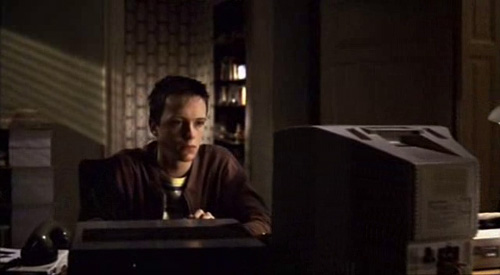
Loosely based on a true story, the film concerns real-life 80s computer hacker Karl Koch (played by August Diehl.)  A rebellious, if somewhat dispassionate teen, his love of the Illuminatus! novels has instilled in him the legitimate belief that a worldwide conspiracy is in power over all.  This belief eventually leads him to the earliest phases of the internet and the hacker subculture.  After making a name for himself at a computer show, he and a friend are approached for a job.  What follows is a series of hacking jobs carried out for, and payrolled by, the KGB.  The increasing pressure from the job, as well as drug use, fuel Karl's own paranoid fantasies, sending him further and further off the rails as the film plays out.

I have to admit, there's something a little surreal about watching these scenes and realizing, relatively speaking, just how far the tech has evolved since this point.  Primarily in realizing this is still younger than I am.

The more I look back at this movie, the more I keep finding myself comparing it to David Fincher's 'The Social Network.'  Both based on true stories, and while each starts with an interesting external event (in this case, the hacking and espionage storyline) in both films, the real meat of the movie comes from its focus on the protagonist and their own internal workings.  In this regard, the film holds up pretty well.  The hacking storyline could have made a good movie in its own right, and for its part it makes for some good scenes of interaction between the four main players (alongside Diehl there's Fabian Busch as his friend and fellow hacker David, Jan Gregor Kremp as the more business-minded Lupo, and Dieter Landuris as the group's KGB contact and drug dealer Pepe.)  As the film goes on, however, we become more pulled into Karl's world and see how his theories go from simple theories to full-on delusions.  So much so that many of the more interesting parts of the later half come from seeing just how his heightened paranoia has driven rifts between him and his partners in crime, whose responses range anywhere from concern to beleaguered amusement.

As Karl, Diehl really manages to carry the range necessary for this transition.  I have to admit, this role caught me a bit off guard at first, as I had previously only seen him in Tarentino's Inglourious Basterds (wherein he was several years older and on the other side of the line between authority and anarchy.)  At the start of the movie, he comes across as your classic sullen teenager, especially in the few scenes he has against his father (Hanns Zischler.)  From there, we see him gain a sort of self-confident air as a hacker only to watch as the downward spiral turns him into an introverted mess of a human being.  It's a lot to cover and Diehl does a good job without overplaying his hand at any point.  Likewise, his costars take on their respective roles well, especially Busch who goes from a good friend to becoming increasingly uncertain of their work and friendship as things come apart.  After a while, you feel bad for the guy because you can tell he's trying to get Karl to snap out of things, but it's a futile effort that came too little, too late.

The one other thing that I'd say really stands out for me on this film is some of the sound and music editing.  Some of the most memorable sequences for me were involving just simple background audio or music, such as the opening titles (panning over Karl's collection of conspiracy notes set to Deep Purple's 'Child Out of Time') and a sequence early on involving Karl and David driving through city streets set to Iggy Pop's 'The Passenger' as they note the many occurences of '5' and '23' in everyday life around them (both considered crucial numbers to the Illuminati.)  Even when not employing music, they still make good use of other audio editing - featuring the real-life events of the time in newsreel montages, while a bit of a cliche, is still played well here, especially in the second half as these events start to feel to Karl as more than just seeming chance occurrences.  There is one other moment would like to mention, but as it's something of a spoiler, I'll just say it's near the end of the film and hope that gives an additional incentive to look up the movie.

Which makes for one Hell of a more interesting road game than the usual 'I Spy...'

Overall, I'm not sure I'd call this one of the greatest movies ever made.  At the same time though, I was very pleasantly surprised by it.  For something I discovered entirely by chance in a wikipedia chain (I can't even remember how it started...but then that's always the way...you start with something like European economics, cut to an hour later as you wonder why the Hell you're looking up the musical career of William Shatner [I'm not sure exactly how that one would work, but if someone can find a way, feel free to post the directions for warped curiosity's sake]) this exceeded what I was expecting.  All in all, still a rather interesting biopic/character study set against an equally pretty cool bit of history.

Wow...been a while since we got a single full-on good review here.  It feels a little bit weird.

Rest assured though, we're diving back into the bag of pain for next week's entry, so the craziness hasn't been abandoned yet.  We're just diversifying is all!

...yeah, I think even here I'd argue this still was better than our attempt. 
Not much in this one case, but still better.

Thursday, August 23, 2012

Less Than Rare Exports

Yes, I know I usually try to stick to just discussing film and film related material here.

Every so often though, something happens that just prompts a train of thought.  Admittedly, this one also DOES tie in to film to a degree, but as it is now, the problem is really more focused around television than film.

That said, this week saw a rather curious debut.  With much bemused skepticism about it on the internet, MTV aired the first episode of their American remake of the British comedy The Inbetweeners.  On having recently watched it, I can honestly say the naysayers had the right idea here.  Even when not comparing this to the original, this was just painful to watch.  The kind of show that feels like it's trying too hard for the laugh and never really gives itself time to breath and just let the jokes flow naturally.

For  the sake of comparison:
VS
For the record, the car door isn't a recurring thing.  From the looks and sounds of things, this is quite literally a remake of the British show.
...yeah.

Though to me, the saddest part of this is that, in this day and age, there was really no need for this.  Not just that it was bad, but the entire idea of remaking it.

I mean, I can accept the fact that there was once a time when I could see the case for trying to pick up a British show for more American tastes.  They've tried to do this off and on for years now, and the internet is littered with the discarded shells of pilot episodes for aborted American runs of popular British titles (such as Red Dwarf or The IT Crowd) or failing that, at least publically disclosed tales of attempts that failed (such as Roseanne's attempt to bring over Absolutely Fabulous, or the Fox network's attempt to bring over the Edgard Wright series Spaced, a reboot that star Simon Pegg looks back on as an utter mess.)

Back in the day, I could dislike it but at least see the logic - for the longest time, British television had almost no airwave play over here, shy of whatever your local PBS took it on themselves to air.  For my part, this was what introduced me to things like Monty Python's Flying Circus, Red Dwarf, Are You Being Served? and 'Allo, 'Allo, but that's a story for another day.  Point was, these shows were always kind of in a niche back then.  They had pretty strong followings, but always on the smaller side.

Then that all changed within the last decade thanks to two things - the increase in prominence of the channel BBC America and the ushering in of internet streaming as a means of television broadcast.

With these two elements in play, British television became quite popular, almost mainstream, in the US.  This is probably best embodied in the major boom of the sci-fi cult hit Dr. Who (a show that was also once tapped for an American reboot that never made it beyond pilot movie)-A series that had formerly been a niche within the nerd culture became a regular part of the modern parlance and has even gone on to achieve major attention here in its more recent forms.  Additionally, its spinoff series Torchwood has gone on to achieve similar levels of praise, even leading to the Starz network funding a new sequel season to the show, with the surviving (Seriously, emphasis on surviving) cast returning.

Likewise, the drama Downtown Abbey enjoys a strong following here stateside, and despite what some would argue in defense of many remakes, the distinctly British nature of the show has not hampered Americans from taking to it and allowing it to gain a considerable fanbase here as well.  Alongside just the fans, this is also worth noting for the fact it has gone on to achieve both critical acclaim as well as landing attention from the Emmy Awards committee.  Not bad, all things considered.

Additionally, as mentioned, the advent of technological developments like Hulu and Netflix have broadened the horizons for titles people have access to and see.  Alongside the above mentioned successes, shows like Spaced, Black Books, Sherlock, Misfits, and The Inbetweeners (to bring this all around again) have all gained interest and followings here.

So we now have the means and we've proven cultural barriers are not as daunting as network executives seem to believe them to be.  Despite this, there remains an assumption that these shows need to be rewritten, recast, and made more 'American' to be enjoyed. 

Now, this isn't to say an adaptation will automatically be bad.  One of the most prominent exceptions I'm sure I would be reminded of if I didn't mention it would be the successful American run of The Office. This show didn't simply recast the same characters and film the same UK scripts- it developed new characters, a new environment, gained a following in its own right. Currently, it has held out for many seasons and made its share of award wins.  Given the timing, I'd actually argue that may have been one of the last shows to still make a decent case for full re-adaptation at that point.

For many of these shows, however, for the reasons listed above, just don't interest people.  Especially not those who are already familiar with the original.  In the case of The Inbetweeners, this proves particularly interesting, as this makes MTV's second attempt to try and Americanize a well-known and well-liked British title, only to have it backfire on them.  Especially strange that they'd try again after the debacle that ensued with their attempted version of Skins.  Despite its apparent failure, they still felt determined enough to try and adapt a series that has gained a following strong enough to see the post-series movie lined up for a run in some US theaters next month.  On top of which, the humor in the original is pretty accessible.  About the worst newcomers would have to worry about is learning some new bits of British slang, and even that's pretty easy to pick up on. In fact, my girlfriend uses "gash" and we both use "wanker" on a consistent basis.

The saddest part is, they should have seen this coming.  Much of the response on the web was the same as people had when Skins US was announced.  Rather than excitement, people simply asked "Why bother?"

Now, and as I understand it, the reception to the Inbetweeners US has been...let's just say I'm apparently not alone on this one and leave it at that.  So will MTV learn this time? More to the point, will the industry in general learn now?  Especially given there's still talk of trying to make an American version of the series Misfits, a show whose popularity on streaming sites has even been noted by the people in charge of the remake.  That's right.  They're acknowledging people love this and they're still gonna try and remake it.

It's like we forgot what happened the last time they had this sort of a set up and how well THAT sold:

See?  I told you I'd bring it around!

Really, I've tried to wrap my mind around why there's such a fixation on doing this.  About the only theory I have left is that, in a system that is now fast being reworked by the new technological breakthroughs, remakes and Americanizations are one of the few ways the 'old guard' (as it were) still has to try and maintain a degree of control over media that, more and more people are being able to see without going through them or their check points.  A theory that I will admit sounds slightly like a  conspiracy theory, but given just how much of the 'entertainment vs technology' battle comes down to the question of control and who has it, this is one that DOES have some grounding.

But, for now, this will only remain speculation.  I will keep an eye out to see how long this new remake lasts, but based on what I saw, I am NOT hopeful.  Much of what made the original appealing is gone, and what's in its place feels much more...let's just go with disposable for a word.

In the meantime, what else can I say?  It's a new age of entertainment distribution, and if you haven't looked into these originals yet, by all means, see what you can find.  we have a lot more to see than we used to be able to, and it'd be a damned shame not to take advantage of it.

Till next time, when I promise we'll be back onto film a bit more and I may be (slightly) less ranting.

Until then, a reminder that all hands and arms stay inside the car cause we can NOT afford another lawsuit this year.

Thank you
--The Management

Tuesday, August 21, 2012

Nothing Quite Like Watching an Artist Take a Baseball bat to His Career's Kneecaps.

Or
"Never give an epic saga an even break."
--Mel Brooks (tagline for Blazing Saddles)

Well, as people may have noticed, things got a bit quite here for a few weeks there.  This has been due to a couple of larger scale projects in the works for the future that will be turning up in due time in the future.

In the meantime, what better way to show that there's still life here than to salute it with exploring one of the all-time great 'career killers' of film.

That said, this is a movie I'd always heard about in passing prior to finally deciding to watch it.  One of those films where you hear almost nothing about the movie itself, and everything about its reputation.  In fact, I had no real idea what it was even about until reading the review from The Onion's 'My Year In Flops.'  I filed it away to look into later, but hadn't acted on it at the time.  Then this year, to the surprise of many on the web, this film, infamous for its borderline legendary history of production problems, and its renowned failure at the box office that the director still never quite bounced back from, was tagged for a release by the esteemed Criterion Collection.  This latter moment is what bumped it back to the forefront of consciousness that leads us to where we are now.

Have you guessed it yet with this clues?  For those playing at home who haven't guessed it yet, we're talking about Michael Cimino's infamous career-killing epic 'Heaven's Gate.'

That's right.  I blame you guys for this.

The weirdest thing about this movie is, taken just on paper it sounds good.  I mean REALLY good.  At the time this was made, Cimino was fresh off the success of making The Deer Hunter, netting wins for Best Picture and Director, and was effectively given the keys to the kingdom by United Artists.  Thanks to 007 movies keeping them pretty consistently in the black, they were a bit more free-flowing with the money for ambitious directors.  Much to their surprise, this would come back to haunt them later, but that's getting ahead of things.  Alongside the director, the cast is a veritable who's who that actually sounds even better nowadays thanks to several of the actors being established further since (to list off just a laundry list of players: Kris Kristofferson, Christopher Walken, Isabelle Huppert, Sam Waterston, John Hurt, Jeff Bridges, Brad Dourif, Richard Masur, Joseph Cotten, and in smaller side roles Terry O'Quinn, Mickey Rourke, Tom Noonan and the uncredited debut of Willem Dafoe.)
...suffice it to say, this was a loaded cast, with an epic storyline to go with it, setting a love triangle against the larger scope of the Johnson County War of the late 19th century.

Taking this into account, one could see how this seemed like a good idea.  I mean, even on looking at the initial pitch, I was stunned to hear the absolute failure it turned into.  So going into this, I was expecting a crash the likes of which would make the Hindenburg look like a mild slip-up.

However, it's worth noting in advance half of this film's grave was dug before it was even released.  Cimino's production history has been fairly well known and documented, especially in the book "Final Cut" by former UA executive Steven Bach.  Nowadays, it's known alongside Apocalypse Now as a spectacle of production mishaps, budgetary problems, and one director who seemed to be dancing on the line to madness.  Several stories have circulated of Cimino's rampant perfectionism and the copious amounts of money it bled from the film, including as many as 50 takes for shots as a baseline.  In fact, the idea that there isn't a documentary about the movie's production (that I'm aware of) floors me.

Looking at him back in the day, it's a little like seeing Stanley Kubrick clean-shaven.  Sadly, this also suggests a Samson effect - remove his beard and he keeps the perfectionist from Hell at the cost of the successful results.

Why am I going on so much about the production history?  For two reasons.  One, because it puts the film's subsequent failure into a much better sense of context.  Two, to be honest, it's actually the more interesting story to tell.

This isn't to say Heaven's Gate is a bad film per se.  The story is one that has potential to be good, and at times even touches on said goodness.  The problem is, like the production of the movie itself, the movie's story tends to go overboard on moments that, while sometimes very well filmed, don't add that much to the overall film.  Cimino definitely has an eye for arranging some of these sequences, and makes for some great individual shots: Walken's first scene on-screen, for example, is a well-arranged little piece of suspense to his reveal as a cold-blooded killer.  Other sequences, however, including two full dance sequences and a cockfight scene add little to the overarcing proceedings beyond padding the movie's run time.  It's even hard to argue that they can be seen as development moments, as many of them focus on characters that don't really come back later on, or their roles for the main cast are then reaffirmed in other scenes anyway.
A sample of one of the dances for those who didn't believe me
Because it was the 70s and roller dancing was still big!

It feels like part of the problem lies in Cimino on this one.  Again, this isn't to say the man has a lack of talent, because he certainly proves he's got some skills in shots such as the above mentioned Walken arrival.  At the same time, his desire to make this film truly epic is as problematic on screen as it was off.  Extra sequences like the above mentioned dances could have been done in less time, and often don't really seem to do much for the greater scope beyond simply padding for time and distracting from the core narration.  Saying this really creates a conflict for me since, while I usually will side with a director and argue it's important to maintain their vision, in this case it feels like Cimino's ambition is his own worst enemy.

Which is probably the saddest part about this movie.  It's a film that feels like there's a very good movie buried within it.  Somewhere, under the close to 4-hour running time of the Director's Cut (3 hours, 40 minutes to be exact), there's a fairly well acted tale of the darker side of American history, as Kristoffterson's somewhat idealistic James Averille travels out west and has his view of the country run through a wringer when the local immigrants in the county he's sworn to protect are targeted for elimination by cattle barons.  Even the love triangle between Averille, brothel owner Ella Watson (Huppert) and friend turned rival Nate Champion (Walken) has some interesting moments and a nice dynamic at times, but unfortunately falls apart as the movie speeds into its violent second half.  With more attention paid and a bit more guidance, these ideas could each have made great stories, and even potentially been run together in a film that could have played like David Lean takes on Americana.  Unfortunately, the overall effect feels like, as stories gain new focus, the older stories are neglected until it's convenient to prioritize them again.  With the stakes in play here, it's a hard balancing act even for a director at the top of their game to do right, and sadly Cimino just feels like he keeps trying to throw more things on to make the balance even more impressive, only to throw it off by mistake instead.

Further adding to these strands of good movie buried within, the cast are largely in good form on this one.  Despite his Razzy nomination for this, Kristofferson makes for a fairly good lead, or at least as good as the script allows for, and Waterston as the head of the cattle barons plays a suitably despicable, but plausible villainous bastard, ordering the deaths of over a hundred people without so much as batting an eye.  Further, in a sort of sad 'then and now' moment, Walken and Dourif both remind us that, for a while there, they were both known as respected actors who would get some great work sent their way; a reminder made even sadder by realizing they still have this talent nowadays, though they sadly don't get as many opportunities to show it anymore.  As the female lead, Huppert carries her role well, though admittedly there are a few scenes where she comes across as flatter than she was likely meant to.  Especially strange, given many consider her to be one of the greatest living actresses even now.  Still, when the emotions run high, she proves she can deliver as needed after all.  Of the other main performances, the two others worth mentioning are Jeff Bridges who, despite being only a supporting role, makes for a pretty show-stealing role as a local businessman with a charismatic way with the locals, and John Hurt as one of Averille's old college buddies who has long since turned to drink out of his own disillusionment with the west.  The latter is another case where this movie leaves me conflicted.  Hurt plays the character well, and he's an interesting character at first, in particular thanks to the dynamic the movie's (rather long) prologue builds for him alongside Kristofferson.  We start the film off with the impression that his friendship with Averille will be a larger element of the film than it turns into.  Instead, when we meet him during the movie proper, his appearance in the beginning never really winds up adding much to the movie beyond a fairly impotent voice of protest among the cattle barons.  About his only real purpose in the film seems to be to tell Averille what they have in mind.  After this, he simply floats around in the background of scenes, quite drunk and wryly commenting on the situation.  By the time the movie's bloody climax is unfolding, his stay in the film sadly feels so overextended that his final scene feels less tragic and more a sort of 'waiting out the clock' to the fate we all can see barreling down on him.

To bring the history back around one last time, as stated above, the movie itself landed with a resounding thud.  While the film itself was panned critically, the brunt of the damage, it's important to remember, was done by Cimino himself during production.  Even before the film came out, the numbers it cranked up meant it would have to perform with a vengeance in order to even come close to making back what it cost to produce.  It was half-way to a dead man walking by the time it came out.  The fact that the movie then underperformed from there just ensured the film would take UA and a good chunk of Cimino's career standing down with it.  People have since speculated its production history may have had a hand in why people came down so harshly on it when it first came out.  Given people still speak of it in somewhat mixed tones, I would say there's something to that.

At the same time though, watching it for myself all these years after, doing my best to keep the shadow of its reputation from swallowing it up, I would be lying if I said I didn't agree with the critics of yesteryear on this one.  Not entirely, anyway.  I certainly wouldn't call this movie the worst I've ever seen by any stretch.  At the same time, however, I can't say I'd call it a diamond in the rough or a lost treasure of a film.  More than anything, it stands out to me as a curious piece of film history - a would-be epic, both on and off screen that collapsed under the sheer weight of its own ambition more than anything else.  That said, I will admit, the more I read on the history of it, the more I would be legitimately interested in seeing a film based on the movie's production itself.  It could actually make an interesting companion piece to the movie itself, in a way - two tales of a man's journey into a bold new frontier and the mishaps and tragedy that ensued.

Overall, I will admit to a certain fascination with this movie.  Just strong enough to not be bad, but flawed enough to keep me from really calling it good, I actually feel kind of glad I finally got around to watching this.  I just wish it could have had a stronger sense of itself than what we got.

There's reports that the Criterion release may be a restoration, with some talk that it may come closer to the movie's talked about, and somewhat infamous, 5 hour cut.  I'm not sure how true these stories are, but if they turn out to be legitimate, I may just feel inclined to check it out when the time comes.  It may risk adding the already problematic bloat that has hampered the film as it is now, but at least it will be impressive looking bloat.

Well, this was a rather curious one.  I mean, after the last 'you were warned' entry here, this one went pretty well...albeit long...very long.
Still, I feel like it was worth the experience.

Till next time!
I tried to promise myself I wouldn't make some sort of Walken-based caption.
...then I saw him sporting a Ron Swanson mustache and that went out the window.