A low, unpleasant groan arises from the furnaces, the lights slowly sputter back on, and the board of health takes their 'Condemned' sign off of the Third Row once again.
It's no secret that this first year was...well...for what was supposed to be a take-off year, 2010 turned into that old stock footage of early airplane prototypes that would start to get off the ground, then crash in a spectacular fashion.
But, like the survivors of those ill-fated nosedives, the stubborn fool in the third row has vowed to persist, pick up the pieces, bury the corpses, and take another go with you all here in 2011 to get it right this time.
I'm gonna ask, in part, that you all bear with me at the start of this (for the first month or so, I will be partaking of that great holiday tradition of methodically repackaging and reserving the leftovers that weren't eaten the previous season.) These will include the final (appalingly late) installment from last year's Blaxploitation History Month (whether this custom continues this year or takes a hiatus till 2012 will remain to be seen) as well as several other titles that were lined up from last year but, thanks to a combination of sloth and general life interfering, never got off the ground.
So, what better way to begin a new year and a fresh start than by another favorite annual tradition of mine, and one I can anticipate your rolled eyes towards: That's right, it's time for the top five of 2010.
For anyone new to this (don't be surprised if you fall under this rubric. That simply means you're in the majority) the rules are as follows: -These aren't in any set order. Just cause one comes over another does NOT necessarily mean it has been favored. -This is based on what offerings of 2010 I have seen at the time of this article. There are still several titles on my 'to do' list that may get amended in sooner (this bit me in the ass hard in 2007, and to a lesser degree in '09)
That said, I suppose we'd best get under way, shall we:
-Inception
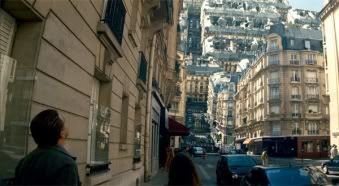
Yep, the ol' obvious pick (every list has one.) This is one I think kind of got misrepresented on a few levels (now this is the point where some of you are thinking "Wait...were you oblivious or...?" allow me to explain.) Don't get me wrong, I definitely thought this was a good film, hence why it's on the list. At the same time, however, I think the film got misrepresented, both by critics making it out to be the cinematic second coming of Christ (hey, it's good, but there's limits) and by marketers who overemphasized the dream element, and left some viewers expecting a surreal reality bender in the vein of The Matrix or What Dreams May Come. As a result, some people felt burned when it turned out the movie was more a psychological heist film than a full blown 'off the rails' head trip. But I digress. In any event, Nolan still delivered a solid ride of a movie with some good casting and a plot that, while not the overly intellectual puzzle some made it out to be, still made for an interesting concept to explore.
See that? That thing you just did with the landscape? You just spent the brunt of our effects budget with that trick. We can't do that again, even if it WAS part of the plan. Go apologize to the viewers now.
-Kick-Ass
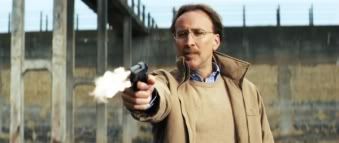
I was actually surprised I enjoyed this film as much as I did. I went in expecting an amusing popcorn film that gave the superhero genre a good natured punch in the cojones. It delivered that, but at the same time, the film proved surprisingly more fun than I expected. Admittedly, I will agree with a lot of people, the real hook for this movie wasn't the titular green-suited hero, but the hardcore-bordering-on-insane vigilante team of Big Daddy and Hit Girl (the former played by Nicolas Cage sporting a glue-on stache and a strangely accurate Adam West Batman impression.) Nevertheless, the whole film managed to maintain a good pace with little sense of any weak or dull points. Odds are it won't make any big name lists, but all the same, again, as a popcorn movie, this exceeded expectations at least.
It takes either a creative genius or a certified madman to make their teaser for a movie this heartwarming scene of a father teaching his daughter how to take a gunshot to the chest. ...in either case, I'd kind of like to see said genius/madman promote more movies.
-Best Worst Movie
When people look at the documentaries that came out this year, odds are better than average Waiting for Superman is gonna be the big one that makes the mark for people (personally, it's on my to do list as well, but, again...all in due time.) Despite that, this is the documentary that wound up reaching out to me this year...admittedly in part because it speaks to a subject near and dear to my heart -- bad movies and why people love them. In this case, the film is a look at the celluloid abortion Troll 2 (which, if al goes as planned, will eventually find itself before the proverbial firing squad here as well as its predecessor in name only,) and its rise to prominence as a cult film. Seeing the crowds and their following for this movie is almost infectious, and there's a bizarre love to seeing this rub off on some of the cast as well years later (admittedly, not all of the stories are happy ones, and the film isn't all smiles and sunshine...but then, that's life for you, really.) If you're a lover of bad film, or are curious to what the appeal behind it is, give this film a look. It's probably the single best explanation I can conceive of (in a nutshell, anyway) for why people love roasting a stinker.
Seeing this now-infamous clip re-enacted 20 years later by George Hardy and the now adult Michael Stephenson alone is worth this... ...if only so you may take part in the debate over whether to consider it more funny or disturbing...
-Black Swan
Because it seems it's just not a recap here in the third row unless we highlight a film about someone's surreal spiral down into madness at a rate akin to a Calvin and Hobbes toboggan ride. This time, with arguably less controversial results than last year's pick, it's Daren Aronofsky that brings us along as we watch Natalie Portman's quest to achieve perfection in surprisingly ruthless world of professional ballet (THERE's something mom and dad won't feature on those recital recordings) eventually drive her to obsession, paranoia, and insanity. Aronofsky again proves his skill as a director, giving us a film that blurs the line between what is and what the character perceives to the point we have to take a step back and try to sort out which is which (...as well as to just cope with some of the intensity. WARNING: If you're squeamish, you've been warned. This isn't a grindhouse film by any means, but there are moments that still manage to make you squirm. Something to be said for the phrase 'less is more' in this case.) The only other thing can think to say for this movie without spoiling anything. I think, in light of this, we can now say Portman's worked off any karmic penalty incurred from the Star Wars prequels, and any award recognition she gets for this role, she's soundly earned.
White face make-up, check Unusual outfits, check Slowly sliding down path to inevitably tragic self-destruction, check ...what a difference doing this with a good script actually makes, huh?
and
-The Social Network
If there's one thing 2007 taught us, and this film further asserts, it's the immortal words of British actor Chris Barrie when he once said "All the world loves a bastard!" This year's proof of that comes in Jesse Eisenberg's Oscar-nominated turn as Mark Zuckerberg, founder of what may very well be the biggest time drainer known to the internet to date (...Hell, do I even need to say which at this point?) Admittedly, the film isn't 100% accurate, nor does it pretend to be. The simple fact is, this story could have, in other hands, been a rather dry movie. What makes it work are, in part, the creative liberties taken with the story between Aaron Sorkin's script, David Fincher's sharp direction, and a largely quite talented cast for their ages (curiously, the one shortcoming being the oldest member of the core group. While pretty handy with comedy, Justin Timberlake just feels...there in this movie.) Played as a seemingly cold, detached individual whom one often wonders whether he's unaware of what he does to others, or simply doesn't care, Eisenberg's bid for this year's 'asshole of the year' role is definitely a nice piece of further proof his career's off to a good start.
The secrets to success have always been the same - lie, cheat, and steal Or, in this case, just pretend to do them all well enough, and then see if you clean house with the critics or not.
Well, that wraps up last year's goods. Stay tuned next week when, God willing, we'll finally get our sorry asses back to work on the backlog of other overdue reviews we owe you and, on a really long shot, get back to this on a weekly basis.
and now, as another great entertainer once allegedly said...
In a further attempt to prove I'm not out to deceive you guys yet again for my own sick amusement, we're back with another visit to the Third Row (...much later than I had previously promised. Sorry. We're still working all the bugs out of the system, as it were...and by that, I mean the guy in this row is working on getting his arse back into a regular pattern for your misery/enjoyment.)
Also, so that I can't be seen as going back on my word, and thus holding myself open to false advertising charges, we bring you the third of four installments from this February's theme of Blaxploitation History Month.
The good news (or bad, depending how you feel about it) is that, as of last week, we've spent all the time there is to spend cinematically at Falconhurst. I'll give anyone masochistic enough to pine for more adventures of the Maxwell clan and the slaves they...somehow I don't think 'love' is the right word here...a chance to say their goodbyes.
...OK, that's long enough.
For those who are still longing for a cinematically altered blast from the past, worry not. We're still going back to another time this week, albeit of a different sort than the last two pre-Civil War shenanigans.
That's right, this week, we travel back in time slightly less far...as we review Fred Williamson's 1975 adventure into the old west, Boss Nigger.
(Yeah...they really couldn't get away with a title like that now. When I first learned about this film, I did a doubletake on hearing its title. On seeing the trailer, I knew I had to watch this and review it.)
Now, on starting this film, it looks like it could theoretically be any western...at least, as far as the first characters we see go. Right off the bat, we're introduced to a group of stereotypical western bandits whose behavior tells you two things immediately: 1) These guys aren't gonna be worth much to the plot and 2) They probably won't be around for long.
Point two is confirmed with a vengeance fairly quickly as the group are ambushed and shot by a pair of gunmen...largely without a fight...barring one fellow who at least gets the dignity of dying with a few last words
...I only said the movie gave him the dignity for it...I never said he used it properly.
Anyway, in the aftermath, the identities of these mysterious gunslingers are revealed to be the heroes of our movie, the bounty hunter Boss Nigger and his partner/sidekick Amos (played by Fred Williamson and D'Urville Martin respectively.)
Now, before we continue, I'd like to take a moment to say something for this opening. To anyone who doesn't know what to expect from this movie (and with a title and pitch like this, you've only got yourself to blame) this opening actually pulls a pretty good fast one. The way Boss and Amos are first introduced, you get no indication of either of them as far as race. All shots are from the shoulders down, and they're wearing gloves. It's only when Amos starts talking after all the shooting dies down that we finally see the two and the reveal is made.
Boss and Amos have found the next few pages for the script in this guy's jacket. Film's back on, guys!
Again, doesn't work too well unless you have no idea what the movie's about, but still kind of a nice touch.
Anyway...while searching the bodies and checking IDs for wanted bounties, they stumble across an interesting find: one of the bandits has a note on them talking about one Jed Clayton, a bounty they've been after, and his holing up in a small town nearby. As is often the case when these things are introduced at the start of a film, the two decide this town is their next stop.
What follows is an opening that does one thing blaxploitation films often excel at...providing the hero with a theme song that can be best summed up in the word 'badass.' This is one of those songs which can get stuck in your head... ... ...and then leave you hoping you don't inadvertently start singing it in public places if you value NOT getting your ass kicked in so hard your teeth go flying.
In fact, here's the opening credits sequence for your enjoyment. Cause every good earworm knows how to spread itself
After that 70s-vintage "They'll Never Play This On The Radio Again" moment of catchiness, we resume the movie. Boss and Amos's trip is largely pretty uneventful (mostly covered via the opening montage. Hey, not gonna complain, while these two are pretty entertaining so far, just riding through the desert can only entertain for just so long.) It's as they close in on city limits that things rev up again and we're introduced to the third member of their travelling group. En route to town, Boss and Amos come across a black family being ambushed by another group of Clayton's archetypical goons (I will give them this much. These guys can kind of aim at least...in so far as they actually kill someone...of course, as far as the stormtrooper syndrome rule goes, sadly, the dead man wasn't exactly considered crucial enough to the lot to be immune to their firing wildly.) Boss and Amos intervene and drive them off...well...more to the point, they mainly kill them...but hey...they're in a blaxploitation western as minions to the film's main villain. In both of those genres, that marks them for death right away anyway. Venn-Diagram the two and the fact Boss and Amos have to shoot them speaks highly for their survivability. In the aftermath, of this, the two are introduced to the lone survivor of the ambush, Clara Mae (played by Carmen Hayworth.)
Clara Mae (...capped from later in the film, I promise. She is NOT this happy when her parents get whacked!)
She points them in the direction of town and even goes in with them. What follows is an interesting variation on the classic 'stranger rides into town.' To this town's credit, they handle it better than, say, Rock Ridge in the movie Blazing Saddles. ...by the same token, I'm a bit surprised with how well they handle it. I mean, we're talking about an old west town here...two black guys come riding in with a dead white guy in tow behind them. Traditionally, this would be a Gary Larson-esque 'Trouble Brewing' moment. In this film, however, it largely just merits a lot of rather neutral stares (although this scene does introduce probably one of the better townsfolk in the film, but we'll come back to him.)
Our heroes arrive to a tumult of... ... ... ...pretty blank stares all around, really.
Anyway, after the walk o' blank stares, we get introduced to another great western subversion, as well as a great moment for D'Urville Martin to shine in his role as the sidekick and comedic relief. Let's put it this way...
When confronted with the classic 'local woman harassed by thugs' in this genre do you
a) Give them a stern talking-to b) Lay them out in one punch each, after which you yell at them about treating women with respect or c) Draw a gun on them, make them apologize to the woman, then order them to take off down the street, holding hands and skipping?
Diplomacy. There's the right way, the wrong way, and the Amos way. Which technically is neither right or wrong...but it's damn fun.
In case it's not obvious from the description (and the fact it's just that much more amusing an option) this movie has Amos pick choice C. This is where I have to take a moment to comment D'Urvile Martin, as he plays the scene (as well as subsequent humorous bits) with just the right amount of smug to make the character likable, rather than annoying (cause let's be honest, playing that kind of confident...a little goes a long way.)
Anyway, Boss and Amos, learning the town has no sheriff, decide that, until Jed is flushed out, the right thing to do would be to take up the office. They're certainly qualified, but this winds up frankly shaking up the town's mayor (played by R.G. Armstrong) who fears the repercussions the town will be subject to if Jed finds out law and order has been reinstated where he has once been allowed to run free. Fortunately for Boss and Amos, the mayor himself is largely pretty powerless anyway, and instead simply hopes when Jed and his boys deal with the new sheriff, he can wash his hands of the matter and save his own hide.
Welcome to town, boys. In your new role as law enforcement, we're pleased to present you your own corrupt, self-serving government weasel to hinder your progress.
Be careful with it, you only get one.
Suffice it to say, with this minimal opposition, Boss and Amos quickly take to their new jobs, establishing a state that the movie's taglines sum up best as: "white man's town...black man's law!" The results of which, actually, really help the town (OK...a couple of them are really, just Boss and Amos messing with the townsfolk (such as Amos explaining the act of calling the new sheriff a nigger is punishable by a fine of $20 or two days in jail) but really, it helps establish the fact they're approaching the job with just enough seriousness that they don't plan to let the townspeople give them grief over their race... ...and if they can do a little good-natured fundraising in the process, why not?)
It really is a traditional system of order, really. The Good Boss giveth and the Good Boss taketh away (...OK, so it's Amos doing it here, but it's all the same system.)
Of course, to their credit, not all the townspeople have it in for him. Despite the rather passive-aggressive duplicity of the mayor and the largely interchangeable nature of most of the residents, Boss and Amos still find a few allies along the way. These ranging anywhere from the well-meaning, if somewhat misinformed Miss Pruitt (played by Barbara Lee), to the local physician (Don Barry), who shares the mayor's fear of repercussions, but still has enough guts to do the right thing in a pinch, and the local blacksmith (played by Ben Zeller) who comes to Boss's aid a few times in the movie... ... ...and curiously, never says a single word. At all.
Despite that, he's still probably the coolest of the townsfolk.
These people, as well as the nearby local Mexicans all, to some degree or other, learn to welcome Boss's application of a spurred boot to the proverbial ass of evil in their town. Of course, as with any western, this charming 'getting to know you' period of shaking down minor goons eventually comes to an end when Jed and his boys decide to turn up the heat.
Actually, the Mexicans get along great with him. Part of why their part of town looks like a much nicer area to hang out in... even with the poverty and Clayton's boys' shenanigans.
I could take you through the rest blow for blow...but I'm gonna have to back off since, among other reasons
1) It's a habit I'm trying to break myself of. It makes these reviews overly long 2) It spoils things for ya...now, in some cases, I realize that's no loss, but in a case like this, we come to point 3 3) This film's actually pretty good...and I'd rather not take away all reasons for seeing it...granted, in a perfect world, even a blow-for-blow would leave you wanting to see it, but I don't want to take the fun from ya.
Anyway, as I'd stated just now, overall, this film was a pleasant surprise. After I came down from the initial reaction that can be best summed up as: "Holy shit...they seriously made this?" and gave the film a watch, I was treated to a film that was actually a pretty entertaining ride.
In evaluating it, one of the first things to keep in mind: this film actually marks the writing debut for Williamson. To his credit, it's a pretty good debut piece. A bit rocky at points (while much of the humor is pretty sharp, there's still one or two lines that are likely to induce a few groans...most infamously, one 'gem' from Miss Pruitt with regards to Boss and Clara Mae) but largely a pretty solid effort. Probably one of the nicest touches about this is realizing that a lot of this film is, in a way, Williamson riffing on his own work to this point (really, the film is as much a parody of the classic 'badass vigilante who cleans up a crooked town' element of blaxploitation as it is the classic 'man with no name' tales of the western genre.) Looking at it again, gotta say...the two genres actually work quite well together (...once you get used to some of the minor anachronisms like the earlier mentioned arrival into town.)
About the only other complaint I have with the script really lies in the ending (...as I now figure out how to best explain without blowing anything.) Now, much of the ending's pretty enjoyable, don't get me wrong. Things build to a great showdown between Boss and Clayton's gang. The problem is, the movie also brings in a twist near the end that feels like it was meant to build up to something more than it does within the context of the film. It's set up, and the dramatic twist is put into place, but it largely seems to go unacknowledged by those who should be effected by it the most. Though it is indeed cited in the ever classic "This is for..." final confrontation, it otherwise seems to be forgotten. In the end, it is brought back, but feels rather subdued after everything that's happened. I realize this may be because such response would likely seem out of place for a stoic hero like Boss, but all the same, it almost feels like the element was either forgotten, or pared down during editing. (...and I'm trying my damnedest not to blow what it is, which is why I'm refraining from being cheeky about this kind of dangling plot thread.)
Anyway...from there, the acting is mostly pretty good. Williamson again proves why he's a bankable lead, this time poking fun at his own sort of archetype, and giving us a great character in the process. D'Urville Martin, likewise, turns in a great job as Amos, being the one person in this kind of parody who seems to be in on the joke, and is living it up. Carmen Hayworth shows a decent range as Carla Mae (which, given the general roles for women in westerns, is still worth something. To this end, there's actually a great bit of back and forth humor in one scene involving her and Martin attempting to discreetly knock out a guard.)
One of the things gotta love about Williamson. He can make fun of himself, and still be badass about it.
The rest of the cast kind of run from doing pretty well to the classic henchmen who tend to fluctuate between functional and ridiculous...but then, that's kind of the idea behind how they work anyways. Most of the townsfolk really tend to be either overly panicky or stoic folk (which, again, kind of works for the genre.) Of these three, the only ones worth noting for anything would be William Smith as Clayton, who manages to be the classic big bad without falling quite into the same 'Yosemite Sam' style pit as most of his army of expendables, Leigh's turn as Miss Pruitt which is mostly pretty good (about the only thing I can hold against her is one particular monologue in the film...you'll know it when you hear it...during the scene, she gains all the emotion and passion of an old elementary school educational film strip recording,) and finally R.G. Armstrong as the town's cowardly and self-serving mayor, who manages to almost seem pitiable at points...at least until you realize how far he's willing to go to protect his own hide, and suddenly he's the perfect scumbag.
Miss Pruitt during aforementioned monologue ...I know Boss, it's hard enough just hearing it in the audience... I can only imagine dealing with it in person.
With a fairly solid cast and a nicely done first-time script, director Jack Arnold has some good materials on his hands for this. While I'm not sure if I can say the film he gives us with them is anything award-winning, I do have to admit...it's actually a pretty damn fun film. Despite the general 'ruthless bastard' tact I've employed on some films to this point in these articles, I can honestly say with a straight face this time, this could be worth your time as a legitimately good film (as opposed to that 'horrible accident happens to a clown' style of so bad it's funny of many of our previous offerings.) I won't say it'll change your life, touch your soul, or any such stuff the professionals get hefty checks to say (...if I'm supposed to be getting paid for these, I'm missing the memo...as well as a hefty buttload of financial incentive to dole out the ol' purple prose) but at the same time, it's a pretty damn fun take on both the blaxploitation genre as well as the western.
As a heads-up for anyone whom I hopefully might have managed to actually sell on checking this out - Remember that earlier comment about how a film with this name would never fly nowadays? It's true. If you want to find this on DVD, you're probably not likely to find it under its original name. It DID get a DVD release, but with the shortened title of 'Boss.'
Now that you've been tipped off, I would again like to apologize for this review being late (...I'm getting it all out of my system, I swear to God.)
Please do remember to come back to the Third Row next weekend, when we (finally) finish up the backlog of Blaxploitation History Month with the 1972 Jim Brown classic Slaughter. After which, I promise some good/bad horror offerings just in time for October.
...
...
...and I promised myself, beyond the title of this article, I wouldn't make any more reference to the famous (or infamous, depending who you ask) song by The Lonely Island...
...but...what the Hell...
HUNTIN' WHITIES (LIKE A BOSS) COLLECTIN' BOUNTIES (LIKE A BOSS) PASSIN' LAWS (LIKE A BOSS) EATIN' BREAKFAST (LIKE A BOSS) RECOVERIN' IN BED (LIKE A BOSS) THROWIN' KNIVES (LIKE A BOSS) ENDING THE FILM (LIKE A BOSS)
Well, it comes to the weekend, and once again, from a bizarre blend of masochism, car crash, or maybe just pity, you've all made it back to the Third Row.
I suppose I should account for the fact that I seem to have vanished for several months (the popular bullshit line being that I'm getting this all out of my system early on. ...I'm willing to believe it if you are, guys.)
Really, just been a lot going on with life in general...lucky for you, that's not why you come here, so I won't bore you with that.
Rest assured that, while it's now September, I do plan to continue the rest of the run lined up for Blaxploitation History month (especially since, after this one, we've got a couple of gems lined up, including one from Fred Williamson.)
So please, bear with as we try to get this burning wreck back on the tracks to continue entertaining, informing, or just mildly antagonizing you all.
Now then... This week, the guy you normally find sitting here has learned very, very valuable lesson...
...never promise you guys a review on a film until I've actually seen it before hand and can actively confirm you have it in good order.
I've learned that the hard way this time...curiously only partially due to the movie itself, and in larger part due to a combination of problematic copy of the movie giving me far more grief than it had any right to and the fact I was feeling just the right blend of creativity and sloth to hold this up.
With that, as you can guess, we come to this week's review. After the delightful antebellum adventures last time in Mandingo, I decided to be a completionist, and, in the interests of the theme of the (sadly now over) month, promise a look at this film's lesser known, 1976 sequel, Drum.
I figured, after the well-intentioned, if somewhat misfired efforts of Fleischer's earlier film, this wouldn't be too bad. Wouldn't be great, but it certainly couldn't be any stranger than my first trip to Falconhurst and the insanity that occurs with the Maxwell clan therein.
...and, to my surprise, I think I could say I was rewarded for my efforts. Whether this reward is a grand payoff, or one of those crappy prizes at the bottom of a Cracker Jack box that makes you remember when they used to have good toys...well...we'll get to that.
Now, on watching the opening sequence for this movie, I find myself of two schools of thought: 1) Well, between the opening song and the wood-cuttings and general slavery-era art used in the opening sequence, one gets the impression they're going to be addressing the matter of slavery here a bit more seriously than its predecessor did. Could it be the packaging lied to me? (actually, the packaging wasn't technically deceptive...but with a tagline like "The White Men Wanted A Stud To Breed Slaves. The White Women Wanted Much More." I can't be blamed for being a LITTLE leery here.)
2) I'm noticing quite a few cast members from the first film came back for this movie... ... ...in different roles (especially since, of the returning cast, at least one had their character die before.) I'm kind of reminded of the old racist concept that people believed all blacks looked alike. Either the casting director seemed to feel this while recasting black actors and actresses from the first film, or these people signed on for contracts and directors didn't want them to go to waste.
Anyways, from here, we have a prologue explaining the origins of our film's title character, Drum (Ken Norton returning to, once again, take one for the cinematic team.)
Seems, 20 years before this film took place, in one of the slave ports of Cuba, a slaveowner's mistress, Mariana, had an affair with one of her slaves, a former king in his own land named Tambura. He got executed for his offense, and she chose to leave with her mulatto offspring (guess who?) Drum becomes the adopted child of Rachel, Mariana's personal servant, and the two come to the pre-Civil War south, a land of peace, tolerance and... ...oh...
Now, I'm gonna say off the bat, this prologue feels like, in its original source, it may have amounted to more. As far as the film's concerned, however, it's largely pretty forgotten after this scene (barring its referencing in a later quasi-incestuous moment we'll get back to.)
After this prologue, we move forward 20 years. Mariana has now settled into a promising new life in America. Yessir, nothing says 'land of opportunity' like running your own bordello! ...what? You were expecting to hear she went on to aid the underground railroad? After the last movie, we all know they weren't gonna go that route here.
Remember a time when prostitution was a respectable business and whorehouses rivaled respectable hotels for decor? Honestly, I think this one may even elude Pepperidge Farm.
It's also as they set the scene we're reintroduced to a familiar face from the first film...
that's right kids, Hammond's back! Granted this isn't really grounds to cheer in the first place...one part cause last we saw the guy wasn't really anything to be happy with...and one part because, while they got several actors from the original back to play new roles in this, it seems they couldn't get one of the one actors whose character survived to return. What Perry King was doing at this point, I honestly don't know...in his place, relatively veteran actor Warren Oates is taking on the role. This time Hammond is older and...well...I'm not sure we can say wiser just yet. So far it seems like he's being played less like King's earlier depiction, more like James Mason's role from the first movie.
...yep, expect more charming racism and lines that will make you stop and go "Did he REALLY just say that?", folks.
But, we're getting off-track...back to the house of ill repute! Over the course of this scene, we're slowly introduced to much of the rest of our key players...among them:
Drum himself. That's right kids, Ken Norton's back for one more trip to the plantation. All things considered though, despite this film's lesser known status, he does seem to get a better deal from it. The script lets him act more, kick more asses, and there seems to be less awkward groping...but we'll get back to THAT later.
De Marigny, as played by John Colicos. This was kind of a hard blow for my younger inner nerd to deal with. My memories of Colicos primarily come from his role as the villainous Baltar on Battlestar Galactica. Seeing him playing a rather flamboyant and lecherous aristocrat with a bad French accent was, as inner child moments go, like having your inner child rush to check out the Christmas tree on the 25th, only to get suckerpunched by Santa Claus and told he left you nothing outside of that five upside the head.
That said, about the best way I can sum up DeMarigny's role in this movie is that he is the bad thing that happens to debatably good people. Every time this guy shows up, things go to Hell in record time.
Blaise. A former slave of DeMarigny's, played by Yaphet Kotto (whom many might remember from such better remembered films as Alien and The Star Chamber.) His first appearance here is...well, simply put, Ken Norton kicks his ass... ...then befriends him. I'd like to say this is the start of a beautiful friendship...and I would...but then I'd be lying to all of you. While I do enjoy deceiving you kids for my own laughs, I have my limits. Rather, Kotto seems to be playing a variation on the role Richard Ward played in the first film - he acts as the more cynical slave who's had a harder life and seen the darker side of white folks that Norton's character has been (relatively) spared. As a result, he acts as a sort of racial conscience and counterpoint to Norton. Unlike last time, however, the gap is wider, and, as in all sequels, the more extreme is the way to go here...but, no getting ahead of ourselves.
Anyway...along with the aforementioned Hammond and Mariana to round out our key players (as well as a few side characters we'll discuss in a bit) we begin the story. Whereas last time we started semi-serious and started easing our way into the craziness one step at a time. Here, we get thrown into the deep end of the pool with cinderblocks taped to our legs and told "SWIM, MAGGOT!"
It seems De Marigny, everyone's favorite antebellum Caligula, has arranged for another exhilarating round of slave fight club in Marianna's back yard. Unfortunately, it seems one of the contenders was a no show.
Never one to be deterred (and thanks to the fact he's already spent screentime ogling him with ever so creepy intent) De Marigny hatches on a brilliant idea: send Drum into the ring! Of course, he's careful to take into consideration the feels of Marianna...he offers up a good deal of threats to get her approval first...
One begrudging consent later and...
I had to promise myself I wouldn't repeat the Mortal Kombat joke from the last entry... so, in the interests of other played out death match jokes: TWO MEN ENTER ONE MAN LEAVES TWO MEN ENTER ONE MAN LEAVES
Drum's first fight goes...well...let's just say he doesn't exactly start out swinging...in fact, he gets trashed pretty hard his first time out (much to the borderline ridiculous taunts by Colicos. See the "White People Say the Darnedest Things" reel at the end of this.) Eventually, he begins to start fighting back, and even manages to secure a victory.
After persuading De Marigny to spare Blaise's life (well...that and his ol' cotton fields, if you take my meaning,) Drum is given an offer for another reward. As he is a lover as well as a fighter, Drum asks for a woman. The scene tself...well...here's where some of that ol' Mandingo charm comes back. These scenes actually carry themselves pretty well...until the white folk start talking. The scene where Drum is looking over possible candidates for a woman becomes REALLY hard to take seriously thanks to Colico's commentary. The sad part is, it's not even as much what's said, since I'm sure the right actor could have captured the dehumanizing element well with that dialogue...it's...well, again it's that accent. It's like the Peter Sellers as Inspector Clouseau voice...only it's not played for comedy!
Anyways, after this madcap pimping session comes to its end, Drum has made his choice in Calinda (as played by fellow Mandingo alumnus Brenda Sykes.) The two have a 'getting to know you' session that, to their credit, could have been really laughable with other actors. They actually carry the scene pretty well...and it looks like this may be a sign things are improving.
...and then he's back.
As though we needed confirmation, it seems DeMarigny has had an ulterior motive in getting on Drum's good side. Remember when I said we had less awkward groping on Ken Norton's part? This was one of the two parts where it still comes up. Luckily for us, Calinda decides to act on our behalfs and tries to interrupt this creepy, accented molestation attempt. When DeMarigny gets rough with her, Drum decides to act on the other part of the audience's behalf and gives him a much deserved smack in the mouth.
But alas, it's not enough to fix that blasted accent!
Slighted, DeMarigny vows a painful, if vague, revenge, and storms out. In this setting, that could run anywhere from a drawn out, Shakespearean revenge that seeks to destroy everything and everyone Drum's ever cared about...or, it may just mean he's gonna send an angry mob to try and take Drum out.
But before we find out his sinister, elaborately planned scheme, we cut to another scene set to move the story forward: Hammond, it seems, has been making a deal with Marianna. After two wives, Hammond's decided he wants to settle down again... ...with a whore.
His words, not mine. He makes it quite clear he doesn't want a wife (it seems, besides Blanche from the first film, his second left him...plus, he's still got a soft spot for the wenches.) With this in mind, Marianna has someone lined up for him: Augusta Chavet (as played by Fiona Lewis. It's worth noting she's not actually a whore...it seems alongside being a pimp, Marianna's been dabbling in matchmaking.)
Back to the secretive and dangerous world of slave fight club, we see the big reveal of DeMarigny's machinations. It seems his brilliant idea of swift and savage vengeance is to send some goons by and have Drum fight another of DeMarigny's slaves...except this guy's using a knife.
It almost feels like a bad video game now: You beat the first boss, next one comes at you with something bigger. By the end of this, Drum's gonna have to fight a slave in either a tank or a giant robot, Depending what the budget allows for...
Things don't go as planned for either side...DeMarigny's goons get the crap kicked out of them, and it's here that Drum's adoptive mother, Rachel, is killed.
A moment of silence. She was only in this film briefly, but she touched all of our lives with her role as human shield and sometime lesbian lover to Marianna, a role that allowed us to look at this film and think "Wow...this has everything!"
Fearing for the life of her son, and having already paired Hammond off with his 'whore,' Marianna gets a brilliant idea: she makes an extra deal to send Drum and Blaise to go with Maxwell's party back to the wonderful land of Falconhurst!
It'll be fun...like the Emerald City...only with less munchkins and more slavery... ...that seems to be the end of a lot of comparisons here.
Remember that quasi-incestuous moment I was talking about before? Marianna says her goodbyes to her son...all the while noting how much he looks like his father. ...this wouldn't be as awkward had she not had him take off his shirt before she pointed this out...
Surprisingly, however, on getting to Falconhurst, the insanity actually seems to step down this time. Whether it's from the lack of James Mason peppering the walls with colorful drawling epithets, or just someone actually trying to make a good film, it's a welcome change. ...although I do admit, I missed some of the insanity.
...and it's because I thought that that the movie decided to throw one more joker into the hat (and after the number thrown in so far, I'm starting to wonder what the Hell the actual composition of this deck is...)
It seems, with the second wife, Hammond had a daughter, young and hormonal Sophie Maxwell (as played by Rainbeaux Smith.)
The sociopathic spirit of Hammond's first wife lives on in this precocious young lady...who makes it a point to prove workplace sexual harassment knows no boundaries of age, race, or gender!
I guess they figured if the work staff aren't getting paid, it technically didn't qualify as standard issue sexual harassment.
In fact, it's thanks to her that we see a rift form between Drum and Blaise in their attitudes on white people. For the most part, these scenes at least try for seriousness...but, in a rare turn of events, this is one time where the script seems out to cut the black actors in on the craziness as well (again, Norton and Kotto largely do pretty well for the material there dealt here...but Goddamn, it's hard to keep a straight face seeing Norton seriously ask Kotto "Did you let her touch your snake?")
These rather cheeky elements of workplace harassment begin setting the stage for what will be, if nothing else, a bit more of a grounded finale than the last film...but, we'll get to that in just a bit.
As conflict rages between the two former friends, we also learn there's troubles for the whities as well (as always...this pleases me, if only cause their drama tends to be the stuff of comedy gold compared to the slaves.)
Alongside Hammond trying to keep his sex offender daughter under control (as we see, she has a regular habit of groping slaves' crotches) he also has to deal with the fact his 'whore' is actually a wife (literally. She didn't sign on for this...)
...under the circumstances though, she's a real trooper here... You'll see more of that in a bit...
This plot strand goes through several bizarre points, including a pep talk between Augusta and one of Hammond's wenches, several arguments where Oates gets to give us more of that ol' time Southern Charm (two conversations of which are sampled in the earlier mentioned 'White Folks Say the Darnedest Things' montage below,) one of which culminates in probably one of the single greatest argument killers I've ever heard...said argument also leads to them patching things up...I guess it's a touching turn of events...seeing a wife who pretended to be a whore and a cantankerously racist old slave breeder overcome their differences and find love together... ...say now, there's a pitch for a romantic comedy I can guarantee you the studios aren't sizing up yet.
Meanwhile, in the midst of all this, Sophie's actions also come to a head when Hammond gets wind of what's going on (...somewhat...another for the clip reel) and, having already had issues with Blaise over fighting earlier on, decides he's become too unruly to keep around, and intends to sell him at the upcoming dinner party (it DOES stand to make an interesting icebreaker.)
Once again, while I'm tempted to explain the finale, I feel like I should leave you guys some mystery (I already skimmed enough here to try and avoid just spoiling the whole ride.)
The things I WILL say:
-We get another for the '...oh WOW' white people file care of a ruthless, and rather stereotypical slave trader played by Royal Dano.
I never thought I'd see the day a movie had a Southern character named Zeke...that they were actually serious about...
-Things between Drum and Blaise finally come to a head (in a BIG way) -DeMarigny comes back, and once again shits things up (and, once again, Drum acts on the audiences behalf with regards to him...this is a part that's as much 'Holy shit' as it is 'Thank GOD!') and -Hammond proves he may not be a complete asshole afterall. ...it's still a majority of him, but it's not the full deal.
Overall, I have to say, this film kind of surprised me. After the first 20 minutes, I found myself expecting the worst from this. I mean, we start off with slave fights, assorted sexual antics, and one of the worst French accents I've ever heard in a serious role.
Granted, I had the expectation bar a bit low anyways. So part of me figured we were in for another "laugh your ass off, then feel guilty for doing so" experience like Mandingo was. To my surprise, while we got a lot of rather ridiculous moments of bad acting and writing, they didn't seem to dominate the film as heavily as they did in Mandingo. I think a large part of this is the fact the looniness seems to favor the white characters in these films...and with the blacks getting much more time and focus this time around...well...
(On this note, a fun fact for anyone who this inspires to find this movie - Among the other side characters in this, keep an eye out for the slave Regine at Falconhurst. It's a young Pam Grier in a role I imagine she probably doesn't have many people bring up nowadays.)
That's her. See? Again, I sometimes tell the truth, just to confuse you guys when I AM lying.
So, in some regards, this film exceeded my expectations, if only by virtue of a low hurdle to top. I can't say I'd call it a great film by any stretch (in fact, while I respect the serious elements of the film for what they're aiming for, they kind of left me missing the craziness) it still actually managed to, once I finally got the blasted disc fixed, be worth the time spent watching it.
...and, as I'd mentioned earlier, and cause I didn't get the chance to properly focus on some of the craziness earlier on, I'm pleased to give you a sampling of the peppered in bits of insanity in a little presentation I like to call 'White People Say the Darnedest Things'
It was this or a Warren Oates tribute set to Cotton-Eye Joe
...yeah, even I felt that'd be a little much.
That concludes this week's WAY too Goddamn late installment from The Third Row.
Please join us next week (and I promise, it WILL actually be next week) when we view a Fred Williamson classic whose title further reminds why they just don't make 'em like they used to.
Well folks, it's...a bit later than the weekend this time, actually. But, once again, you've found your way to a seat here in the Third Row.
Before we start this week's feature, you're going to be subjected to a rambling, and a bit of a preamble for this month.
First off, earlier this week, I finally caught up with the rest of much of the proverbial free world and saw James Cameron's much-vaunted Avatar.
Will this one upset the earlier established top 5? Eh...
Don't get me wrong, it certainly wasn't a bad film overall. Was worth seeing and all, especially in theaters, where it's prettymuch made for the suitable hardware...
At the same time though, outside of the technology breakthrough, there wasn't much else that gave me any strong sense I was seeing film history happening (again, I'll acknowledge the tech will probably make a big splash on the map, but I don't imagine the story or world-building has gone above or beyond far enough to really embed themselves in the pop culture.)
The story's largely pretty good, but at the same time, it's something that's been done repeatedly in both science fiction as well as fiction as general (hence all the joke comparisons to Dances With Wolves, Pocahontas, and Ferngully.) Even as far as how it executes said story, it doesn't really do anything particularly striking beyond its visuals.
Curiously, and this was the big sticking point for me, Cameron's apparent love for the Na'vi REALLY paints the story as one-sided.
We're given a story where humanity is seen as constantly lacking and has absolutely nothing really going for it, while the Na'vi are treated as living perfect lives on a planet that the movie treats as a sort of Eden compared to Earth (...once you get past the fact that, unless you can hook into these things like a biological CPU, the entire planet will try to kill you...might I suggest making your summer home investment some real estate on Arrakis? Much lower chance of being ripped apart by the local wildlife and the neighbors have higher odds of asking questions before they stick ya.)
So yes...outside of irritation at the largely one-sided (moreso than most fiction in these cases tends to be) depiction of two cultures, the film itself is still a generally pretty solid popcorn movie.
...that said...I grow a bit concerned by its awards prospects at this point.
It's already taken Best Drama at the Golden Globes, to a wave of many concerned voices, and is currently in the running for Best Picture at the Oscars (although with the net expanded to include 10 nominees, that's not quite AS impressive as it used to be. Some eyebrows DO still go up for James Cameron getting a Best Director nom.)
Now, I don't begrudge James his success, really. More power to him that the film's doing well. I guess, old man as this is gonna make me sound, I grow concerned about the kind of message this film taking best picture is gonna send in the industry. Generally even some of the praising reviews will acknowledge story to be this film's shortcoming. It is, in general, a technology testbed which has a decent sci-fi story attached. So if it gets declared the best movie of the year, what does that say for the industry? Technology is what matters? Style over substance, as it were?
Again, perhaps I'm looking at this wrong...but under the circumstances, even if that's not the message that the Academy intends to send, I still have a bad feeling that, if this comes to pass, that WILL be the message studio execs glean from the win. As a result, the industry will be inundated with movies trying their damnedest to embrace the new technology (Hell, this is even happening now, complete with talks of trying to refit some upcoming releases to match the system) with concerns of storytelling and general film quality taking a backseat to visual hook.
...
...ANYWAY, that ends my old man gibberings for today.
Now then...I'd like to address something which I'm sure faithful readers (...all two of you) have noticed.
The Third Row has been strangely empty the last two weeks.
There is a good reason for this...two, actually. First, the talkative little asshole who sits here had some business to finish in his own life outside of the row, and had to tend to that.
Second, we received a call from the Board of Health. Seems the Grand Guignol that was the Geist double-feature left a LOT of blood, and a few organs in the seats when we discussed those. Unfortunately, some of them got left...and...well...you leave that kind of stuff long enough, we've got a health scare.
We apologize for the fact the last two weeks, the Third Row was cut off by emergency tape, and plan to do our best to make it up to you. Of course, how we propose to do this is through a gesture that will have many of you either groaning or curse my name.
That's right kids, it's a theme month!
Admittedly, I'm trying to avoid making these happen too often (mostly cause then I'm kind of forced to pick something in that theme for a whole month) but every so often, I feel inclined to pick up on a particular genre.
February is especially helpful for this, given it's a short month anyways.
Plus, February gives us a great chance to play with great genre of yesteryear...a genre that's remembered in equal parts for its memorable characters and styles, its often catchy soundtracks, and its themes that could run anywhere from delightfully cheezy to sometimes quite empowering.
So, in one of the few times I will ever use the word 'pleased' with regards to the idea of theme months...
I'm pleased (and in light of this week's feature, a little bit ashamed) to declare February Blaxploitation History Month here on The Third Row.
For each weekend in February, we'll be looking at films from this now sadly oft overlooked genre. These will run anywhere from the greats that people still look back on as general classics, to a couple of films that...well, let's just say time hasn't really done them any favors...happens with all genres.
Maybe, if this reviewer can actually get the chance, we might even cover a rather surprising title which has managed to help give the genre a new spark of life last year.
In the meantime, I'll stop rambling and we'll begin this month with...probably one of the more awkward titles of the time period (admittedly, this one's VERY debatable in its blaxploitation status. Its sequel seems to be marketed as such, but this one's...up for some question. I tell you guys what though. In light of this one's questionable state, I'll even throw on another at the start of March...partially cause I could get to enjoying these.)
Anyways, we start off with this rather dubious piece from the 1970s: a time period where, surprising as it is to believe, filmmakers really COULD get away with a lot (and if you don't believe me, look back at such classics as Blazing Saddles, A Clockwork Orange, and The Rocky Horror Picture Show and ask yourself if they'd fly in regular theaters nowadays.)
Today's film is a touching tale of the friendship between two men in a time of hate. A friendship that transcends many boundaries: race, class, one friend owning the other like property, said first friend putting second friend to work on his land, said first friend entering second friend into a secret underground fight club against other slaves, said second friend being hit on by first friend's wife, which then leads to first friend trying to boil second friend ali--OK, MAYBE their friendship hits a wall there.
Anyways, we'll be discussing all of this, and James Mason in probably one of the most awkward roles of his career this weekend as we review the infamous 'Mandingo.'
The plot for the film is...kind of an odd mix of points, really. It seems torn between two particular plot strains. The first of these concerns the assorted trials and tribulations (to put them mildly) of the Maxwells, an affluent Southern family. Most notably, of son Hammond (played by Perry King, some time before his apparent exile to the realm of made for TV cinema.) The other plot line, and the one that the film's title is in reference to, is about the character of Mede (played in a debut role by Ken Norton.) Mede, short for Ganymede, is the newest slave bought by the Maxwell family. Well intentioned, but naive, Mede finds himself in an increasingly more conflicted role as he becomes friends, after a fashion, with young Hammond, while being repeated conflicted by what he sees with regards to his role as a black man in this world.
Ken Norton's debut moment... bad news Ken, the whities are only gonna get stranger from here.
...wow. That almost makes it sound good, doesn't it? At times, it actually does have potential to be a good movie. Then we come back to the Maxwell family...whose lives are like a bizarre form of soap opera with an added element of inbreeding.
Let me see if I can untangle all the threads of THAT mess for you. It makes Mede's inner conflict feel pretty straightforward.
For starters, we have Hammond. From the start, we see he's a bit mixed about how to feel about the slaves...he still defers to them, but at the same time, he isn't as flip with abusing them as, say, his cousin Charlie (whose idea of foreplay with a 'wench' consists of flogging her with a belt...and this is only the first half-hour. Buckle in kids, it's gonna be a long 2 hours. On the plus side, you won't be seeing Charlie for a whole lot of them. Thank heaven for small favors, eh?)
In fact, as the story goes on, Hammond actually seems to develop a rapport with several of these slaves that he is expected to treat as property...he genuinely cares about Mede as a friend for a time, and even seems to show more love for one of the wenches (their words, not mine, I swear!) named Ellen more than he does for his wife, Blanche (played by Susan George, whose director guidance seems to consist of "I need more psychotic bitch!")
Speaking of whom, Blanche's story arc is... ...something of a curious one. It seems she and Hammond are, indeed cousins. Which makes their marriage, while fitting in context, a bit awkward for us. They seem to be off to a pleasant start at first, and in the beginning, they both come across as nice enough people. Until they actually get married and consummate their love. Hammond, it seems, is fine with marrying his cousin, but has a hang up over the prospect that someone else has had first go at her. This becomes something of a minor plotline in its own right (one that ends rather awkwardly when its revealed who her first was in a bit of a shock moment that's all but forgotten after the fact.)
It really says something about this culture that it's the fact she lost her virginity that Hammond gets so hung up on... nevermind the fact that it was to her brother.
Then we have dear old patriarch Warren. Oh my, where to begin here. I'd like to start by saying, it breaks my brain to realize this is James Mason in this role. Not cause it's particularly amazing acting mind you, actually, it's probably a low point for him. It's more realizing that the man I associate as the classy devil of such films as Disney's '20,000 Leagues Under the Sea' and Paul Newman's 'The Verdict' is the cantankerous southern stereotype letting the racial slurs fly like they're going out of style. That's...kind of his schtick in this, really. He occasionally acts as a sort of half-assed father to Hammond, and the rest of the time is just a total shit to the black characters in the film.
That said, I'd like to make a shout out for the young boy who plays the slave who Warren uses to cure his rheumatism. This has to be one of the most bizarre roles someone could get in a film, but the fact the kid went through it means he deserves some respect for this.
"'You'll get to be in a big movie.' they said. 'You'll get to work with big stars.' they said.
This agency's dead to me!"
Anyways, Mede's path crosses with the Maxwells roughly a half-hour into the film when he's bought at an auction. Once again, I'd like to take a moment to give a shout of respect, this time to Ken Norton. When your big screen debut starts with being brought out in a pair of shorts and having an older German woman stick her hand down the front of your pants, this is the least of what you've earned for sticking it out.
His initial encounters are among some of the better parts of the movie. He's doing allright, but there are several moments that make him question just how much he might be compromising himself as a black man by becoming friendly with his owners (many of these coming care of one of the other slaves, the older, more cynical, Agamemnon, played by Richard Ward.) Things only make a turn one day when Mede gets into a fight with another slave.
MORTAL KOMBAT! (and anyone who finds themselves humming the theme, you're a horrible person, just like me.)
Suffice it to say, this catches the attention of not only the Maxwells, but also another slave owner, who finds Mede to be one bad mother--OK, I'll refrain from the bad Shaft joke here...I swear.
Anyways, he informs the Maxwells of a specialized sort of fight club that goes on where slaveowners send their slaves against one another in hand to hand combat.
So we're all clear on the rules here... First person to bring up the rules of fight club gets a lynchin'!
Anyway, as it wouldn't do at all for him to get eliminated halfway through the movie, Mede does well in his fight. In fact, he completely, literally, kills his opponent. More importantly, as this fight goes down, we see one of those rare cases of the white people in this movie actually having decent development. While Warren still remains ever the racist bastard we all know and... ... ...accept?... Hammond shows visible concern for Mede's welfare in the fight, even telling them to call off the fight when things aren't looking so good for the guy.
But that's not the end of the violence, kids!
While Mede's off kicking ass in the Dixieland kumite, back at home, Blanche is...well...let's be perfectly honest, Blanche is going a wee bit nutters. You see, unable to properly reconcile with the fact he wasn't the first person she ever slept with, Hammond hasn't been on the best of terms with Blanche. In fact, he's actually, in turn, been on much more amicable terms with Ellen, whose currently carrying his baby (you can hear the soap opera music already.) Of course, this isn't exactly a deep kept secret. As a result, Blanche takes out her own hostilities on poor Ellen.
Screaming curses and beating a pregnant woman... Now why Hammond wouldn't want this, I have absolutely NO idea, do you?
Flash forward to the next day as the team returns with an injured, but triumphant, Mede. Hammond is looking forward to seeing both his wife and his lover and has brought gifts back for the both of them...this is the moment where he learns the hard way that, just cause society isn't gonna tell him 'no' doesn't necessarily mean it's a good idea to try and balance multiple women at once...doubly so when one is about as mentally balanced as a half-played game of Jenga.
To Blanche's surprise, she's the one that gets chewed out for savagely beating a pregnant woman...oh, the injustice of it all!
Anyways, Warren has a profound heart-to-heart with both his daughter in law and his own son. His stance is quite clear: he's not sure what went on, but Goddamit, he wants a grandson to carry on the legacy!
This is...probably one of the best and worst moments of the entire movie, really, and one of the culminations of the 'yes, this IS James Mason' moments in his little pep talk with Blanche. I was tempted to just put up the entire conversation, but as I'm sure you're all busier than I (depressing as that is to admit) I've boiled it down to probably one of the finest gems of the scene.
That's the one thing I always love about James Mason...everything he does just oozes class!
In the aftermath of the charming 'Father Knows Best' moment, Hammond tries his own hand at smoothing things over by giving his wife her present of rubies.
It's kind of like one of those DeBeers ads... except I don't think those include a prologue with the woman savagely beating the husband's mistress.
It's now a bit later and things are all sunshine and lollipops again... ...and slaves...almost forgot the slaves.
Hammond's away on some business transferring some of the slaves (as well as promising Ellen he has no intention of selling off their child. It's...I suppose it could be seen as one of those moments that makes you go 'awwww'...after which, you stop and go '...wait a second.')
While he's away, Blanche returns to sociopath mode with a vengeance. Feeling unfulfilled by her own husband, she decides to beat him at his own game by sleeping with Mede herself.
'But wait a minute' you stop to wonder 'Mede respects Hammond, why would he do that?'
Well, that's a very good question, dear reader! One even Mede seems to wonder about...but that's why Blanche has her sociopath mode. After some good natured blackmail (no pun intended...I swear to God, Jesus, and all 12 apostles!) she's managed to get Mede to hit the sheets with her. From the look on her face, she seems to be enjoying it. I'd like to believe he at least is as well, but we never really get to see his face...more often, the camera seems focused on Blanche's own 'kind of somewhere between ecstasy and insanity' face.
Mede looking guilty. I can't say I blame him...sleeping with the boss's wife is one thing... but when said wife is prone to violent outbursts and sociopathic behavior...poor guy can't catch a break, can he?
Anyways, jump ahead around nine months or so (...you can see where this is headed already, I'm sure.)
Blanche is in labor and everyone's awaiting the bouncing new heir of the Maxwell estate...oh, are they in for a surprise. Sure enough, the child that comes out is a healthy, lively little mulatto.
Unfortunately, the kid makes the mistake of arriving just as the film completely goes to Hell.
Luckily, he's not in long (I won't go into details so as to leave you all SOME reason to see this) and all of Hammond's seemingly human behavior flies right out the window. For a man who has, throughout this movie, shown varying degrees of compassion to the slaves, and even friendship to Mede, his reversal into full blown racist jerk feels like someone just flipped a switch. It's a development that, honestly, feels like it could have actually been a good element in the script with more lead in to it (especially given the fact that this twist is supposed to help remind Mede that, in the end, he's still going to only be treated as just another slave.) Instead, it just feels like they realized they were running out of time and needed to speed the film to wrap things up.
Which, of course, seems to also explain the finale that, honestly, has to be seen to be truly believed. Without trying to cheapen it with descriptions, let's just say it involves a giant pot of boiling water, a pitchfork, a rifle, and Agamemnon getting to do something that this reviewer was kind of waiting to see happen for the entire movie.
OK, THAT we can show you.
Partially because James Mason deserves some sort of prize for the best/worst last words ever.
The moral of this scene, well, there's a lot one could plumb from this entire bizarre finale, but this last part is best summed up with 'When confronted with a clearly distraught man with a gun, racially baiting him is probably NOT a good move.'
Honestly, the more I look at this film, the more it really DOES feel like two different films. Like stated above, the film seems to alternate between Mede's own moments of questioning his role in this society as a black man. These scenes are, perhaps nothing award winning, but actually relatively well written, and sport some good acting (mostly pertaining to Ken Norton and Richard Ward, the latter acting as a sort of racial Jiminy Cricket to Norton. Not to be taken as a slam, actually, Ward is one of the people who actually carries his role pretty well, especially considering how often he kind of gets run over by other characters.)
The plots involving the Maxwells however...while I realize elements of their lives are certainly things that are considered commonplace in the time period, the fact is, between some of the dialogue (such as the above linked conversation between James Mason and Susan George), the acting (...again, see above) and some rather clumsy jumps in the screenplay resulting in certain characters' evolutions feeling like they just woke up one day and went "You know...maybe I'll try being a complete nut-job for a while...just to see what it's like!" all conspire to REALLY undermine the movie. In fact, there's parts of the Maxwell clan's saga that feel like they're bordering on camp, which just winds up making it harder to take the scenes involving Mede and the other slaves seriously, much as I honestly want to.
All things considered, this was a bit of an awkward start for this theme...and one that I can't help but wonder about the production history of, the more I look at it. For a source material adapted from both a novel and a play, this movie feels strangely like it's fumbling for plot. I'm not sure if that's from having too much to work with, or just gross departure from the text.
Granted, maybe I'm being a bit hard on this film, given there's a likelihood this just hasn't aged as well as it probably could have. By the same token, however, there may be a reason this one hasn't endured nearly as well as say, Roots.
In any event, it seems there WAS enough material and demand for a sequel film... which, if you can believe it, we'll be covering for next week.
If you stuck with us through this bizarre journey into southern comfort, please join us this coming weekend when we look at the lesser-known sequel, Drum.
...hopefully, it'll be a bit easier to take seriously
...and, ah what the Hell...once more, James Mason reminds you what not to do when faced with a man with a gun
 It takes either a creative genius or a certified madman to make their teaser for a movie this heartwarming scene of a father teaching his daughter how to take a gunshot to the chest. ...in either case, I'd kind of like to see said genius/madman promote more movies.
 Seeing this now-infamous clip re-enacted 20 years later by George Hardy and the now adult Michael Stephenson alone is worth this...
 White face make-up, check