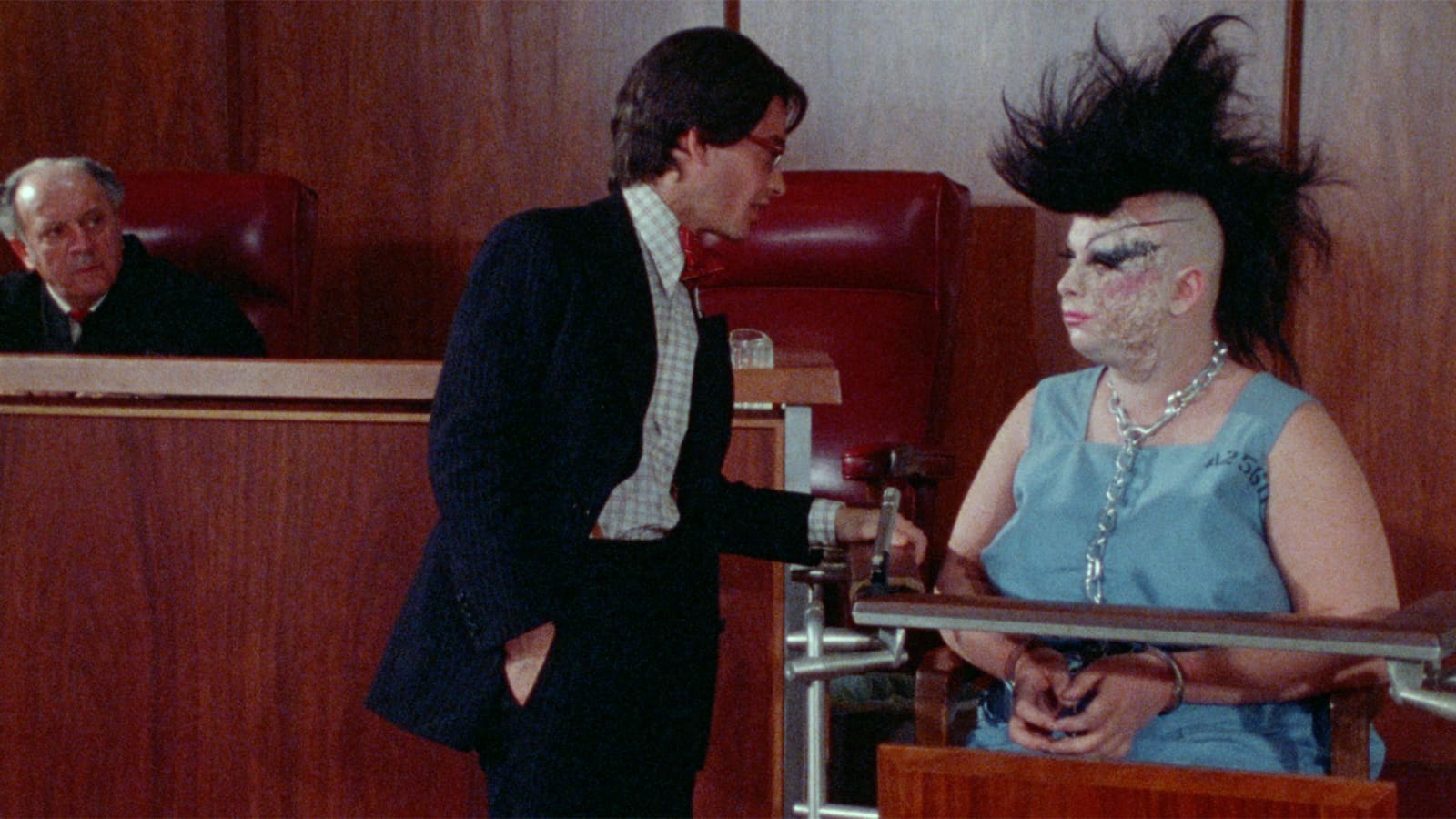
Tuesday, June 15, 2021

Paris is Burning (1990)

 Welcome back, readers, for another round with the Criterion Challenge.

We're getting there. Still workshopping the name some more, but we're getting there.

With that, a happy Pride Month to those celebrating it, both just as a general courtesy and as Queer Cinema will be the theme for this month.

And to start said theme, I'm firing up the one movie that was an automatic lock for this month since as soon as the theme was locked in - the 1990 documentary Paris is Burning.

I actually watched this in the back end of last month because I have more than two films lined up this time, and because I wanted some time to really turn over this one. This is in part because, honestly, I recognize I'm an outsider on this topic. I know that's at least part of the point for a documentary like this, in its exploration of drag and ball culture, but it also means I wanted to really process thoughts on it rather than just go off the cuff.

So here goes and please bear with me.

I know I've brought this up in the past, but I need to repeat it here - the older I get, the more my attitude towards film and the idea of 'could have been' has changed. In the past, it was a sticking point - a demerit when I came out of a film feeling like it could have made a better choice and didn't (it sometimes still is, but nowhere near as often.) Lately, I'm more struck by those movies where you can see how it could have gone a safer, more traditional route to its relative detriment, and didn't.

Paris is Burning definitely falls into that latter category. Part of this is thanks to how director Jennie Livingston handles the subject matter. In a different set of hands (I'm not sure I want to say less capable as much as less aware) this movie would have played more like a travelogue - a filmmaker positioning themself as an outsider to whom the world of drag and ball culture is to be explored and findings brought back to the 'normal' world. To Livingston, however, the movie is first and foremost about the people who inhabit this culture.

To that end, Livingston herself isn't really a presence we are aware of in the movie. She is the one filming and asking the questions, but she is never seen on camera, and the main reason we know the questions being asked is because her subjects clarify them before answering. The focus is framed entirely on the people - from seasoned veterans like Dorian Corey to relative up and comers like Venus Xtravaganza, for just two examples. Ultimately, the movie becomes more focused on learning about those who are competing than about the nature of the competition itself.

That is a big part of what keeps this from feeling like the cinematic work of a tourist, for lack of a better descriptor. Livingston films this aware that she is a relative outsider - while she is an out lesbian, that is still an altogether different experience from what many of her subjects go through (contrary to what some pundits will insist, the LGBTQIA+ experience is not a monolith). Further, instead of just making it perfunctory questions about the competition only, she lets her subjects open up about their lives - the homes they came from (and, sadly, in many cases were driven from) and the new family they have found in the drag community. As Livingston herself has put it best, one of the main themes of this movie is how those interview have learned to survive in a world that is, in many cases, openly hostile to them, while keeping their dignity.

If you wind up checking out only one of the movies I've picked for this month, this should arguably be it. Nothing against the other two, which are both altogether excellent movies, but in terms of this theme, this is arguably the movie that best hits the mark. It's a reminder, at different times funny, encouraging, sobering, and heartbreaking, that under all the cultural tags and debate, it's people just trying to find a place they feel they can truly be themselves in the world.

Well, with any luck I didn't just set too high a bar for the rest of the month.

Especially because next up, I'm going to be doing something a little bit different. This next entry marks a first for this project, with a guest on for a crossover discussion.

The discussion, and subsequent writeup soon to come.


Till then!

Sunday, May 30, 2021

Kagemusha (1980)

Welcome back for another round of the Criterion Backlog Challenge.

I really need to come up with a better way to set these up. ANYWAY --

The exploration of the cinematic symbiosis between Akira Kurosawa and George Lucas continues this week with a movie that's both an interesting piece of cinematic history as well as a great film in its own right - 1980's Kagemusha.


First, the history, seeing as that's how this ties into the theme.

Even though I've been aware of it for the better part of a decade now, it still feels strange to remember that there was a time when a director like Kurosawa, generally regarded as one of the world's finest now, had a hard time getting movies funded. After his involvement with Tora! Tora! Tora!, a project that took a mental toll on him ultimately led to his being replaced, he spent the better part of the 1970s struggling to get funding in Japan for his movies.

Flash forward to 1978 - a young George Lucas, riding high on the success of Star Wars, gets to meet one of his cinematic heroes to discuss a project. During that meeting, Kurosawa pitches a story of a thief who is tapped to serve as the double for powerful warlord Shingen Takeda. Lucas is quickly enthralled with the idea and enlists Francis Ford Coppola to help him secure funding for it.


This isn't really tying into the main points for the entry,

but I do need to go on record as saying it -

Tatsuya Nakadai is phenomenal as the movie's lead and is

a big part of what makes it work so well.

With the backing of two of the superstars of the then young Hollywood era, the movie became one of two that would help revitalize Kurosawa's name and be considered among his best works (the follow-up, Ran, also had overseas funding.)

Perhaps not as intertwined as last time, but nevertheless, it ties into the theme and is a great piece of film history.

As far as the movie itself goes - I was a bit stumped how to go about picking a focus point for this until being reminded of one line that perfectly encompasses the movie on multiple levels.

To set the scene, the movie establishes early on that the plan for the thief is only temporary. Even when the idea arises of having the thief continue to play Shingen following the warlord's death, it is intended only as a stopgap. Once the clan consolidates and secures itself, the plan would be to let the real Shingen's fate become known and transition out that way.

As the movie draws to its third act, the ruse largely a success, one of the generals in the know asks the question - "When the man ceases to be, what becomes of his shadow?"

This question is at the heart of Kagemusha, both as a character study and with the protagonist's larger task of maintaining the Takeda clan.

For the character, this is why we never learn his real name. All we know of him before he becomes the new Shingen is that he was a thief who was sentenced to be crucified before being spared to be used as a double. Any details of who the man was are left in the movie's first act as irrelevant to his role for the clan. Like the title says (literally translated as 'Shadow warrior') he is there to be a shadow of the real Shingen, conveying his image to his clan as well as to his enemies. The role becomes the man - even as the thief knows his function is superficial, he comes to care deeply for the larger clan. This affection grows to the point where, when he is found out, he is heartbroken that he isn't allowed to say goodbye to Shingen's grandson himself.

That the thief is so subsumed by his role leads to part of the tragedy of the ending - as he is at the beginning of the movie, the thief would happily take his reward and go without a second thought. As we know him by the end, however, he is unwilling to leave the people that have become his world. Even as a peasant, he follows the Takeda army to battle and, ultimately, his own death.

That larger downfall is the other reason that quote sticks with me. In the context of the scene, it only refers to the thief himself, questioning what will await him once the knowledge of Shingen's death comes out. At the same time, it perfectly speaks to the Takeda clan as a whole.

The plan works for a time because the thief purely needs to just speak as coached and follow the generals' leads. He is a face to a larger body that recognizes their clan needs to regroup without their general. The problems arise as a result of Shingen's son, Katsuyori. Katsuyori is introduced to us as a man who is both stuck in, and ultimately chasing after, his father's shadow. That the movie also establishes he is to be skipped over in the line of succession only further fuels his drive for advancement and glory.

It's that desire to follow in his father's path and achieve his own glory that brings about the movie's tragic final act. First it is in his actively striking out while the generals seek to fall back and regroup. This on its own is at least turned around - partly thanks to the thief's presence on the battlefield. Once Shingen's double is revealed, however, it causes the generals to lose their ability to check Katsuyori, reluctantly following his lead as he begins a doomed campaign, arguing that it is what his father and ancestors would do.


The ending also feels fitting with the larger sort of

anti-romantic sentiment Kurosawa's period pieces often have.

Despite Katsuyori's talk of his ancestors and their past

glory, his own campaign falls prey to one of the great

dark jokes of history - "Those who live by the sword,

get shot by those who don't."

Like the thief, the larger forces of the Takeda clan are Shingen's shadow - and with his passing are ultimately doomed to soon follow him into death. In that regard, having the thief follow them to his own doom is a grimly fitting thematic conclusion. Both fates are intertwined - the man who made them what they are is gone, they can only fade with him.

This brings May to an end. As the month changes, so too does the theme.

So see you guys back here next month where, in honor of Queer History Month, we'll be looking at some standout titles in queer cinema, starting with a documentary that's been on my to do list for a while now.


Till then.

Sunday, May 16, 2021

The Hidden Fortress (1958)

Welcome back for another round of the Criterion Backlog Challenge.

I was vague with my description of this month's theme last time. I was curious to see if anyone would figure it out.

If anyone did, they didn't say here, so Hell with it - in honor of May the 4th, we're looking at the cinematic symbiotic relationship between Akira Kurosawa and George Lucas. 

As such, it was only fitting to kick the month off with Kurosawa's 1958 adventure film, considered to be one of the major touchstones that inspired Star Wars, The Hidden Fortress.


Weird, but related, note about me - over the years, my fandom of Star Wars has developed an odd sub-category. That is a fascination with the malleability of the fandom's collective memory. Digging into the behind the scenes history and development is fascinating both for its own sake and for how much of what people have been told and passed along is retroactive mythology.

I bring this up because the role of The Hidden Fortress is one of those topics that gets distorted. Yes, The Hidden Fortress was an inspiration on Lucas, but it's one of many, and frankly, it's one in very broad strokes rather than a direct lift as fans and detractors have argued.

Rewatching this, I was struck less by the parallels between it and 1977's Star Wars and more about the parallels between it and Lucas's later The Phantom Menace. There's so much put into the idea of comparing A New Hope (as we've come to call it) with this movie that it's kind of caused people to miss that the film has stayed with Lucas beyond just '77.


No, seriously.

Main plot point involves a princess in hiding after her

people are defeated and their lands occupied who has

to assume the part of a commoner while traveling with an older

samurai general and some scrappy friends made along the way.

Yuki's character and plot were tapped into hard in '99.

It's not just the story beats that have stuck with Lucas, however. It's hard not to notice to see how much of Kurosawa's camera work has been influential as well. Sequences such as the opening scene of peasants Tahei and Matashichi fleeing an already lost battle can clearly be seen echoed in parts of Lucas's trilogy.

Speaking of the peasants, they make for one of the interesting shifts between Lucas and Kurosawa. Revisiting Kurosawa's films in recent years, I find myself more aware of is how his period pieces often contain aspects critical of Japan's feudal era and some of the ideology of the era. In this case, that comes from where the movie starts off - our two unlucky peasants fleeing the above mentioned lost battle they joined for fortune and glory, instead getting mixed up with several misadventures.

There has already been a great deal said comparing the ill-fated duo to Lucas's bumbling androids, R2-D2 and C-3PO. In this regard, however, they invite a comparison with a different Star Wars character. Besides the droids, the pair also serve as a less lucky Luke Skywalker, leaving their farms for adventure and instead getting into scrape after another before finally getting their reward.

There's more I could say, both for this film and Kurosawa in general as pertains to their influence on not just Star Wars, but much of modern adventure cinema, but to be honest, I'm saving that for a later entry - which I'm sure some of you have already guessed.
For now, this brings this entry to a close.

A belated May the Fourth be with you to you all, and next we jump ahead a few decades to a time when Lucas got to return the favor to Kurosawa.


Till then.

Thursday, April 29, 2021

Female Trouble (1974)

 Welcome back for another round of the Criterion Backlog Challenge (still trying to find a better name.)

As with last entry, we're continuing to play in the delightfully filthy world of John Waters. Following up on Polyester, we're going back to the earlier years of the Dreamland players with his 1974 black comedy Female Trouble.

Once again, I repeat the disclaimer regarding Divine - Yes, in real life, Divine was a man, and as far as all reports show, was not transgender. Having said that, I am still opting to use the her pronoun, as Divine is still treated as a persona different from Glenn Milstead. Just getting that out there now.

To start - I'm still a relative neophyte where Waters is concerned. I've seen several of his movies, but not all of them. With that said, I think Female Trouble might be my favorite of those I've seen.

Rewatching this with what I know of Waters's early output and on the heels of Polyester gives interesting perspective. In many ways, this feels like a conceptual earlier link in the evolution to Polyester as a more 'mainstream' Waters movie. It has much of the weirdo, anarchic spirit of earlier films like Mondo Trasho and Pink Flamingos, but also more of a structure and thematic throughline.

Much like on Polyester, this is one where Waters' love of film really shines. This time, however, he isn't so much paying tribute to one particular director/style as he is several different genres. Over the cinematic life of Dawn Davenport (Divine, again proving there's a reason she was a regular muse to Waters), her story is told in a series of vignettes that play from high school delinquent stories to melodramas to 'women in prison' exploitation. Equally impressive is that Waters is able to make the beats serve the story/character admirably without any of the pivots feeling misplaced.

This isn't related to the particular image, but I do need
to point out - again, like last time, this movie's title theme
song is catchy as Hell.


Coming from the other side of the equation, this is a top notch showing for many of the Dreamland Players. This was far from their last appearance (in fact, many later appeared in Polyester) but it's worth pointing out because they are in top form here and I would be remiss not to give them their due. Divine, for example, is a full blown force of nature in this. I spoke last time about her ability to play the cinematic straight role (such as it is) in a movie where everyone else was playing up the weird. Here, she becomes the nucleus of crazy that many of her co-stars orbit around.

This isn't to say they're diminished by her, either. Several of the other Dreamland regulars shine in this, many in how they play off of Divine. In particular I have to give a shout-outs to Mink Stole as Dawn's daughter, Taffy - conspicuously older than written, albeit that's part of the joke.


Stole's Taffy Davenport MIGHT be the closest thing to

a 'sane' character in this movie.

Which, as you can see, is still only going just so far.

With that general praise, there is one aspect in particular I want to focus on – by now this is sort of becoming the mechanic for these entries after all. For Female Trouble, the stand aspect out for me, both that first time and now, is how the film addresses celebrity, and why it still feels eerily resonant nearly fifty years later.

Heads up, we're getting into some spoilers ahead. You've been warned.

Last chance to either turn back or jump to the ending.

As a protagonist, Dawn is, in her own paraphrased words 'a thief, a shitkicker, and she'd like to be famous.' She gets that wish in a way that plays to the theft and shitkicking care of Donald and Donna Dasher, (David Lochary and Mary Vivian Pearce, both playing batshit pretentious perfectly.) The Dashers are a preening couple who believe crime is art and see their latest muse in Dawn. The trio get on like gasoline and a blowtorch as Dawn's criminal antics gain her a following that dances between admiration and freakshow appeal. The line becomes especially blurred after Dawn is attacked and burned with acid – a cavalcade of fans are led by the Dashers into her hospital room to watch the removal of her bandages, the burns met with a wild admiration.

Dawn's fame is seemingly untouchable, as every act of violence draws more of a crowd. Even near the end of the movie when she strangles her own daughter to death, the act is met with wild applause. The crowds love all her artistic absurdity and cruelty, the illusion only breaking when she asks her infamous question “Who wants to die for art?, a question that gets enthusiastic volunteers until she opens fire. Once the audience realizes they can be effected, they quickly turn. Even the Dashers, Dawn's top enablers, are all too willing to throw her under the bus once the police arrive, getting away scot free as she's sent to the electric chair.


Again, there's something striking about watching this fifty years out and how familiar it still feels. It's not like this was unheard of at the time - the movie's opening titles include a dedication to Manson family member Charles 'Tex' Watson, after all (a choice Waters has since admitted he's not proud of). Watched in the cold light of 2021, however, after years of seeing people who have either built or attempted to build reputations for celebrity on anything from just pure shock value all the way up to involvement in criminal activities (I'm not gonna name names because we could be here for hours) it's hard not to be shocked, impressed, and even a little bit disturbed how well this holds up.

It's still a very entertaining and funny dark comedy, but damn if time hasn't made those laughs THAT much darker.

On that note, I'd say that's as good a spot as any to wrap up here.

I had hoped to get one more trip into Dreamland in before the end of the month (keep an eye out, that may be a wild card in the future!)

Time, however, marches on, and I'll be back here soon for a theme I will explain when the time comes involving not one, but two directors.


Till then!

Tuesday, April 20, 2021

Polyester (1981)

 French provincial
They do their best
To stay neutral
Expressionless, ah-hah,
Come on upstairs
Meet your polyester queen

What can I say? That song gets in your head and sets up shop.

Welcome back to another round of the Criterion backlog challenge.

As discussed last time, this month we're focusing in on one director – the weird, the wild, the proudly filthy John Waters. Kicking this off, we're starting with his first foray into the (relative) mainstream, Polyester.


Up top, two general notices:

First, I want to tip my hat to one of my old college film professors. I enrolled in Professor Noletti's course on film genre the year he taught melodrama. It was thanks to that course and its deep dive into Douglas Sirk that I got that much more of what Waters was going for here. So thank you, sir, wherever you may be. This may not have been the influence you intended, but damn if I'm not grateful for helping me appreciate the joke of this film more.

And for the record, I'd say Sirk's work is worth seeking out, but that's for another time.

Next, a general preface regarding the film's star, Divine. Yes, in real life, Divine was a man, and as far as all reports show, was not transgender. Having said that, I am still opting to use the her pronoun, as Divine is treated as a persona independent from Glenn Milstead. Just getting that out there now.


Or, as Waters himself has put it best:

"Divine didn't want to be a woman,

Divine wanted to be Godzilla!"

Okay. We all good? Everyone got their Odorama cards ready? Great. Let's dive on in!

Parody in film is, and always has been, a hard type of comedy to get right. For every Blazing Saddles or Airplane!, there's any number of misfires (see, just about anything else the Zuckers worked on, save for the Hot Shots! films.)

Which, ultimately, became what I wound up hinging this write-up on. Why is Polyester one of the spoofs that works where so many others don't?

I can think of a number of reasons, but two in particular stand out and go hand in hand.

The first of these, cliché as it may sound, is love. It's not a necessary requirement, but there is something to be said for riffing a genre you love for a full feature vs just trying to make a film out of something you are uninterested in or actively dislike. The latter isn't impossible, but it is more difficult, as you are less invested, and less likely to find those extra angles to play with compared to a filmmaker whose mockery is affectionate.


In Polyester's case, Waters has made a movie that is a classic Sirkian melodrama at heart – a housewife's life is beset by tragedies and finds new love. It's not any one film, but it's written in the vein of them. That classic story is then run through the filter of Waters's signature cinematic batshit. As outlandish and absurd as it gets, at no point does Waters feel like he's disdaining the trappings of the genre, or acting like he's smarter than them. At its core, this movie still looks to them as a map. Most of the silliness comes from him simply turning up the drama up to the proverbial 11.

The other reason this succeeds is Divine's performance as the film's put upon heroine, Francine Fishpaw. It's a change for Divine compared to her earlier work. When one mentions her with Waters, the first roles that come to mind tend to be the wonderfully brash, over the top characters like Babs Johnson or Dawn Davenport. Compared to those, Francine is a 180 degree shift – she brings her share of the over the top moments, but compared to everyone else, she is the grounded one. In her own words, she's a good Christian woman (and for a time, alcoholic) maneuvering a world populated with gleeful sleaze mongers, coked up old ladies, foot-stomping maniacs, and former teen heartthrob Tab Hunter as a love interest with a wild dark side.


and credit where it's due - Hunter is clearly

having a field day playing the increasingly unhinged

Todd Tomorrow.

I could keep going with outlining all the movie's delightful absurdity (all I will say besides the above - “I never wanted to use macrame to kill!”) but it all comes down to one thing – Divine's performance is a grounding force for the film. If Francine was as outlandish and crazy as everyone else, the movie would lose its plot and run completely off the rails. It could still be entertaining, but it would be untethered and likely collapse before crossing the finish line. Instead, we get a funny, bizarre movie that Divine does a titan's job of keeping together on her good Christian shoulders.

In closing, I will note (as I should have at the start) John Waters is not a filmmaker for everyone. I feel like recommending, say, Pink Flamingos to someone sight unseen MIGHT be an act of abuse.

Having said that, if you have any interest in seeing any of his films, Polyester is a great way to test the waters. A lot of his signature craziness, but also with more of the structure than his earlier Dreamland productions.

So if this sounds like it could be fun, by all means, seek it out.

And don't worry, you don't HAVE to use the Odorama card.

That's it for now. Waters month continues as next time we probe the immortal question – who wants to die for art?

Till then

Tuesday, March 30, 2021

Wanda (1970)

Hello and welcome back for another round of the Criterion Challenge. We're bringing the month of March to a close with our second feature for Women's History Month: Barbara Loden's directorial debut, Wanda.


As I said last time, this is a break from the previous two entries in that, unfortunately, there is no larger directorial body of work from Loden. Within a decade of the movie's release, which was limited but acclaimed, she had died of breast cancer.

I'm saying this up front partly to clarify what I said last time, and partly because I wanted to get that out of the way early so I wouldn't dwell on it. Because it is a shame – Wanda is one Hell of a first film.

Besides the 'what could have been' aspect of Loden's larger career, the single biggest thing that caught my attention was its central character. This is by design – the movie's entire arc hinges on its study of the titular Wanda Goronski (played by Loden) as she makes her way through numerous scenarios.

Loosely based on a mix of other stories of women and aspects of her own life, Loden presents Wanda as a character who, by her nature, has lived her life by the lead of whatever man she happens to be with. This causes her to come across at points as disaffected and detached – such as in the beginning of the movie when she yields custody of her children to her ex husband with no contest – and ultimately adrift as she crosses paths with several men who use and discard her to their own ends.


The bulk of the movie is born out of one of these particular encounters, when a chance run-in puts her in the company of a fugitive named Norman (Michael Higgins), who is at first evasive, then ultimately enlists Wanda as a partner in his life of crime.

Within the larger scope of Wanda's character, her dynamic with Norman is interesting both in its similarities and its differences. There are numerous aspects where we see Norman treating Wanda with the similar sort of callousness of other men in the movie, ordering her on errands and in one sequence telling her in extensive detail what to and what not to wear.

At the same time, there is also a sense of trust Norman shows Wanda that is lacking in other interaction she has with men in the film. This isn't to say it makes their relationship an especially healthy one, as he is still clearly controlling in many ways. Still, it is striking how the fact he puts trust in her to accomplish things causes her to become more engaged and alert than we see her at any other time in the movie.

It's arguably the healthiest relationship she has in this movie.
And damn, that is bleak to think about.


It's also part of what makes the ending of this movie, for me at least, genuinely haunting (for lack of a better word.) Without giving too much away, things with Norman go awry and Wanda is left on her own again. After another bad encounter, the movie ends with Wanda sitting in a bar, looking detached as she appears to wait for the next person to come along and give her direction.

It's an arc that's both depressing and compelling in many ways. Even more when one hears Loden talk about the inspirations for her character. Incidentally, the Criterion release does include some archival interviews she gave promoting the movie that are worth watching, both for her inspirations and just the steps taken to get the film made on the budget she had.

When this first came out, the reaction to Wanda herself was decidedly mixed. I can see why – to some, her passive nature could be seen as less than engaging. Personally, I think it's part of what caught me – like a lot of films lately, this is one where I could see the more conventional story that could be told here, and the fact it instead went with following this character who just keeps trying to find someone to give her a purpose made for a different and compelling narrative.


I told myself going in that I wouldn't just make this dwelling on what Loden could have done as a filmmaker had she not died, but it's hard not to wonder. Even more with those above mentioned interviews – there is really a sense she could have gone on to make more great work.

Alas, we only got the one feature, albeit one that is still very good in its own right.

And so, we bring the month to a close.

Speaking of directorial careers, we're going a slightly different theme for next month. In honor of the man's birthday, as well as my partner, who is a fan of his work, we're venturing into the weird and wacky world of John Waters next month.


Till then.

Tuesday, March 23, 2021

One Sings, The Other Doesn't (1977)

Welcome back for another round of the Criterion Backlog Challenge.

By now, you have a good idea of the breakdown. New month, new theme. As it’s Women's History Month, the films are all movies directed by women.

I'm kicking this one off with a director whose work I have been meaning to get around to prior to this, and feel honestly a bit surprised it took me this long to get to.

That said, as a first taste of the films of acclaimed director Agnes Varda, One Sings, the Other Doesn't made for a very welcome introduction to her prolific career.

As aspects that stand out go, I think if I had to pick one, it's the overall structure and scale of the movie. The movie manages the unique balancing act of feeling both expansive and ambitious but also intimate and character-focused in how far it's willing to reach just in tracing the lives of its two protagonists.

It's also interesting in that the film doesn't start with their first encounter. We are first introduced to Pauline (Valérie Mairesse) through her meeting with Suzanne's lover. We learn from that she had previously met Suzanne (Thérèse Liotard) in passing, but it isn't until the events that start the movie, where Pauline makes arrangements to help Suzanne covertly afford an abortion, that their friendship truly forms.

This becomes the first of several points during which the two women's lives intersect. It's one of the interesting aspects of the movie for me because while the two do have several scenes together (and Mairesse and Liotard do play that camaraderie well), much of the movie is them living their lives separately, communicating in brief correspondence and meeting up when and where they can throughout.

This is one of those touches about the movie that really sticks with me the more I think about it. The nature of the friendship is crucial to the film, but it's not a driving piece of the plot as it would be in a more traditional take on this sort of story. The friendship serves as a means for Suzanne and Pauline (later Pomme) to verbalize their thoughts about their own personal journeys.


Additionally, as someone who hadn't really had any prior

knowledge of France's own politicial history with regards

to abortion, the movie provides a notable snapshot therein.

I keep coming back to the number of ways a movie like this could have gone the more conventional route with its storytelling and structure. They wouldn't make it a bad movie, but if anything, it makes the balancing act Varda accomplishes between the scope of time and the intimate nature of her two leads' personal journeys all the more impressive. Again, this is a first time for me with Varda, but if this level of nuance and characterization is consistent with her overall filmography, I am very much looking forward to seeing more of her work.

Two for two now on this project introducing me to directors who have made strong first impressions. This is part of what I was hoping for in this project, and will be keeping an eye out for an opportunity to see more of Varda's films from here.


Till then